

Product Overview
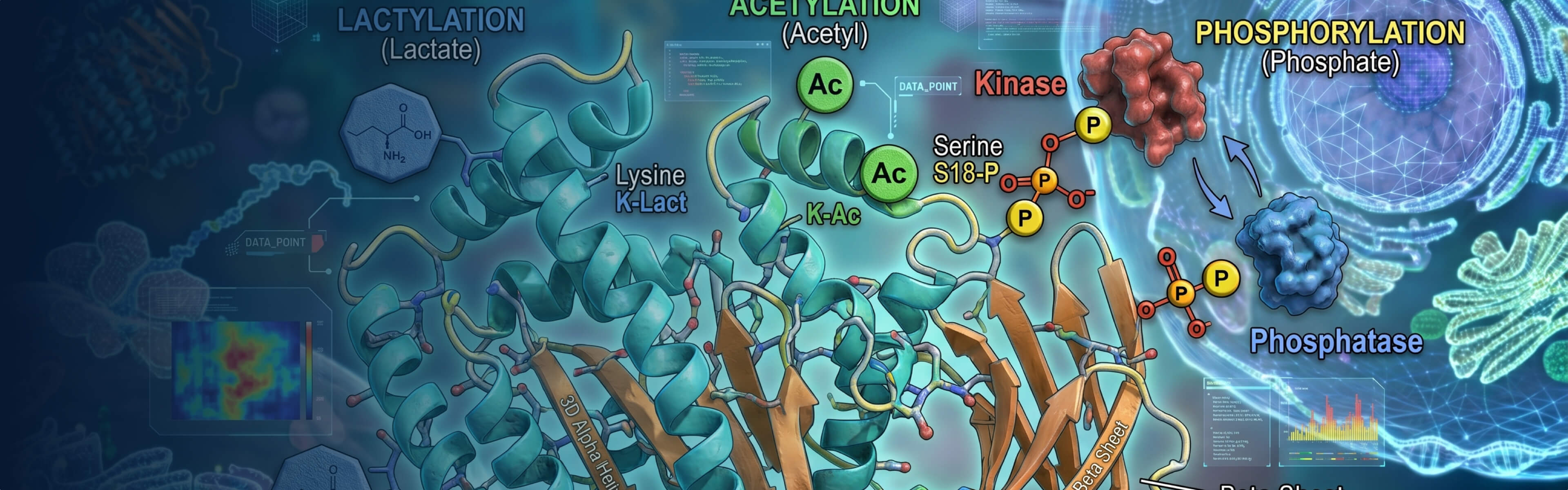
Acetylomics is an important branch of proteomics, focusing on the systematic analysis of the distribution, dynamic changes, and biological functions of protein acetylation modifications. Acetylation refers to the process by which the acetyl group of acetyl-CoA is covalently bound to a lysine residue of a substrate protein under the catalysis of acetyltransferases (KATs). It is a key epigenetic regulatory mechanism, widely involved in gene transcription regulation, DNA damage repair, cell division, signal transduction, autophagy, and metabolism. This service encompasses integrated analysis of quantitative proteomics and Acetylomics, supporting mechanistic research and target discovery in fields such as oncology, neurodegenerative diseases, and metabolic diseases.
Technical Process
The principle of acetylation enrichment: The anti-acetylated lysine antibody (Pan-Kac) specifically recognizes and binds to acetylated peptides, and selectively captures low-abundance acetylated modified peptides from complex samples through immunoprecipitation.
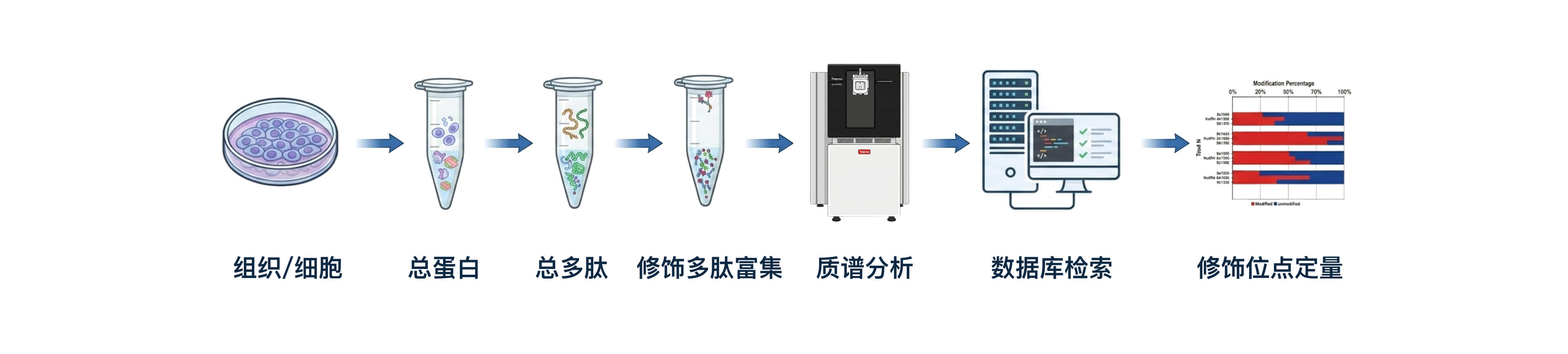
Schematic diagram of acetylation modification omics process route
Applications
English Title:A histone deacetylase confers plant tolerance to heat stress by controlling protein lysine deacetylation and stress granule formation in rice
Impact Factor:8.8
Journal:Cell Reports
Research Content:This study reveals that the cytoplasmic histone deacetylase HDA714 confers heat tolerance to rice by regulating protein lysine deacetylation. Acetylation modification analysis showed that the overall protein acetylation level in wild-type rice decreased under heat shock, while hundreds of proteins in the HDA714 mutant exhibited abnormally high acetylation, significantly enriched in glycolytic enzymes and stress granules (SGs). HDA714 stimulates glycolysis by deacetylifying metabolic enzymes, and simultaneously localizes to heat-induced SGs, interacting with various SG proteins for deacetylation modification. Functional validation experiments showed that HDA714 deficiency leads to excessive SG protein acetylation and impairs SG formation, while overexpression enhances heat tolerance. This study establishes for the first time the molecular link between protein acetylation, metabolic reprogramming, and stress granule formation, providing a new target for crop stress resistance breeding.
-修饰组学@2x.jpg)
English Title:Quantitative proteomic analysis of the lysine acetylome reveals diverse SIRT2 substrates
Impact Factor:13.6
Journal:Scientific Reports
Research Content:This study used quantitative acetylation modification technique (SIRT2 knockdown and overexpression model) to systematically identify the substrate profile of SIRT2 in HCT116 cells. Through immunoaffinity enrichment of acetylated peptides combined with LC-MS/MS analysis, a total of 2846 acetylation sites (from 1414 proteins) were identified. Of these, 896 sites showed increased acetylation levels after SIRT2 knockdown, and 509 sites showed decreased acetylation levels after SIRT2 overexpression. Modification technical analysis revealed that SIRT2 substrates are significantly enriched in pathways related to carbon metabolism, glycolysis, RNA transport, and colorectal cancer, and identified 168 novel SIRT2 substrate proteins, expanding our understanding of the role of SIRT2 in metabolic regulation and tumorigenesis.
-修饰组学@2x.jpg)
Sample Submission Requirements
- Sample
- Routine Animal Tissues (brain, liver, spleen, lung, kidney, muscle, etc.)
- Specification
- 300mg-1g
- Remark
- Sample
- Plant Tissues (leaves, flowers, etc.)
- Specification
- 5-10g
- Remark
- For high-moisture/high-polysaccharide tissues (such as fruits, tubers, and mature leaves), the sample size should be 10-15g.
- Sample
- cell
- Specification
- 10^8
- Remark
| Sample | Specification | Remark |
|---|---|---|
| Routine Animal Tissues (brain, liver, spleen, lung, kidney, muscle, etc.) | 300mg-1g | |
| Plant Tissues (leaves, flowers, etc.) | 5-10g | For high-moisture/high-polysaccharide tissues (such as fruits, tubers, and mature leaves), the sample size should be 10-15g. |
| cell | 10^8 |
References
Chen Z, Xu Q, Wang J, Zhao H, Yue Y, Liu B, Xiong L, Zhao Y, Zhou DX A histone deacetylase confers plant tolerance to heat stress by controlling protein lysine deacetylation and stress granule formation in rice Cell Rep, 2024 Sep 24;43(9):114642.DOI: 10.1016/j.celrep.2024.114642. Epub 2024 Sep 5. PMID: 39240713
Zhang H, Dammer EB, Duong DM, Danelia D, Seyfried NT, Yu DS Quantitative proteomic analysis of the lysine acetylome reveals diverse SIRT2 substrates Sci Rep, 2022 Mar 9;12(1):3822.DOI: 10.1038/s41598-022-06793-5. PMID: 35264593; PMCID: PMC8907344

Shenzhen Wininnovate Bio Co., Ltd.
Innovative mass spectrometry and AI technologies provide protein and metabolite mass spectrometry multi-omics solutions for life science research, empowering the growth of the biotechnology, pharmaceutical, and healthcare industries.


