


Product Overview
Peptidomics is a high-throughput research method based on high-performance liquid chromatography-tandem mass spectrometry (LC-MS/MS) and bioinformatics analysis. It aims to systematically identify the sequences, abundance, post-translational modifications, and proteolytic cleavage sites of endogenous or enzymatically generated peptides in biological samples (such as tissues, body fluids, and cells). This technology can dynamically monitor peptide generation and degradation processes, revealing the regulatory mechanisms of proteasomes, secretases, and other action networks, providing crucial molecular information for discovering disease biomarkers, elucidating signal transduction mechanisms, and identifying functional bioactive peptides.

Peptidomics Mechanism Schematic
Technical Process
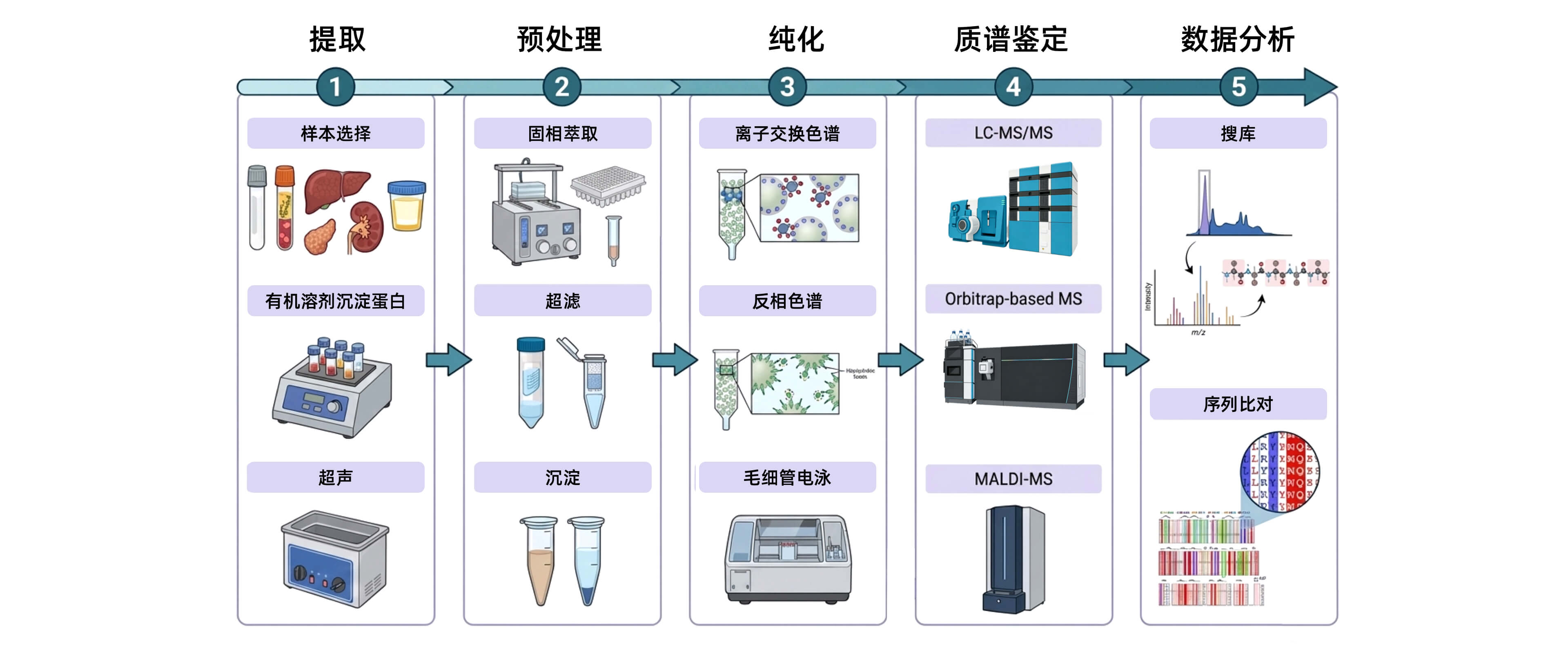
Schematic diagram of peptidomics process route
Applications
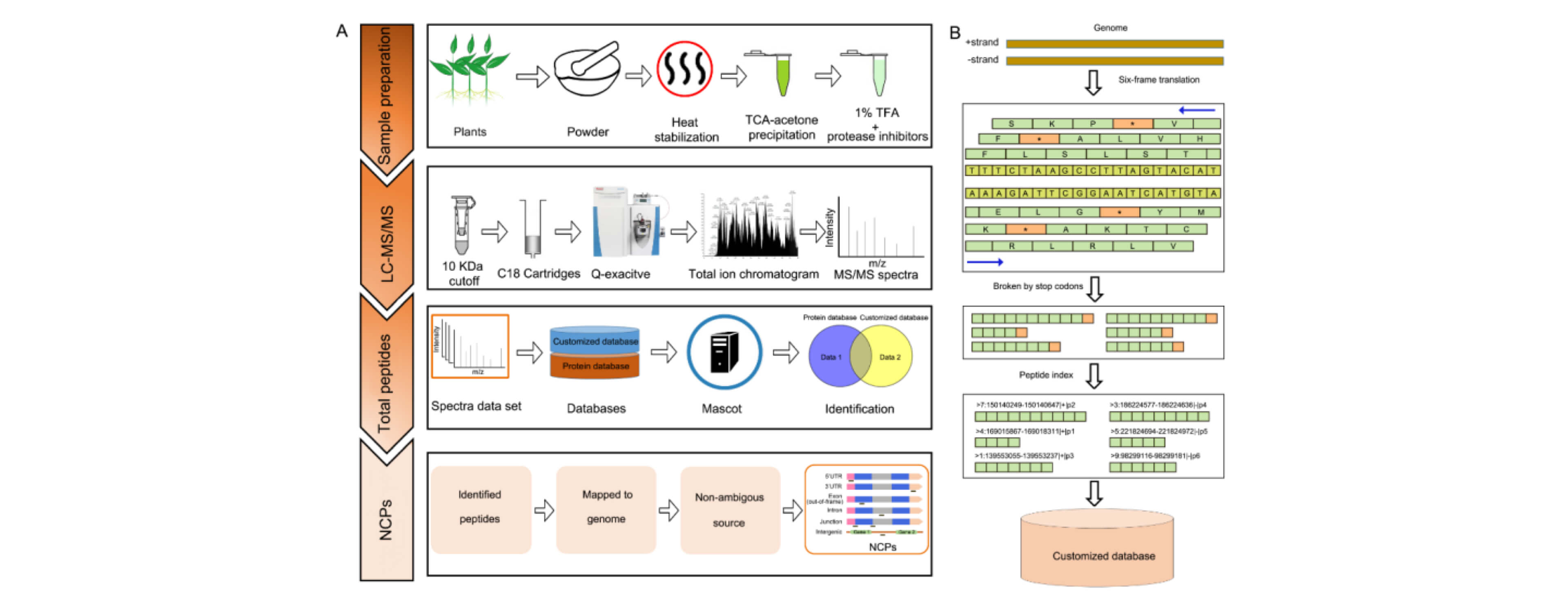
English Title:Large-scale Discovery of Non-conventional Peptides in Maize and Arabidopsis Through an Integrated Peptidogenomic Pipeline
Impact Factor:24.1
Journal:Molecular Plant
Research Content: This study developed an integrated peptide genomics workflow, enabling the efficient extraction and mass spectrometry analysis of endogenous peptides from maize and Arabidopsis leaves. A customized database was constructed using six-frame translation of the genome, achieving large-scale identification of non-conventional peptides (NCPs) in plants. The experiment identified 1,993 and 1,860 NCPs in maize and Arabidopsis, respectively. These peptides mainly originated from introns, 3′UTRs, 5′UTRs, intergenic regions, and different reading frames—regions traditionally considered non-coding—and exhibited shorter lengths and lower molecular weights than conventional peptides. Further analysis showed that NCPs were significantly enriched in QTL regions associated with phenotypic variation and in maize domestication selection regions, suggesting that these hidden small peptides may play important functions in the regulation and evolution of complex plant traits.
Sample Submission Requirements
- Sample
- Cell
- Specification
- 1*10^7/ set
- Sample
- Bacteria
- Specification
- OD600~0.6 / set
- Sample
- Serum/Plasma
- Specification
- 200 uL
- Sample
- Tissue
- Specification
- ≥200 mg in annimals, ≥3 g in plants
- Sample
- Urine
- Specification
- 5 mL
| Sample | Specification |
|---|---|
| Cell | 1*10^7/ set |
| Bacteria | OD600~0.6 / set |
| Serum/Plasma | 200 uL |
| Tissue | ≥200 mg in annimals, ≥3 g in plants |
| Urine | 5 mL |
References
Foreman RE, George AL, Reimann F, et al Peptidomics: A Review of Clinical Applications and Methodologies J Proteome Res, 2021;20(8):3782-3797.DOI: 10.1021/acs.jproteome.1c00295
Li L, Wu J, Lyon CJ, et al Clinical Peptidomics: Advances in Instrumentation, Analyses, and Applications BME Front, 2023;4:0019.DOI: 10.34133/bmef.0019
Wang S, Tian L, Liu H, et al Large-Scale Discovery of Non-conventional Peptides in Maize and Arabidopsis through an Integrated Peptidogenomic Pipeline Mol Plant, 2020;13(7):1078-1093.DOI: 10.1016/j.molp.2020.05.012

Shenzhen Wininnovate Bio Co., Ltd.
Innovative mass spectrometry and AI technologies provide protein and metabolite mass spectrometry multi-omics solutions for life science research, empowering the growth of the biotechnology, pharmaceutical, and healthcare industries.


