

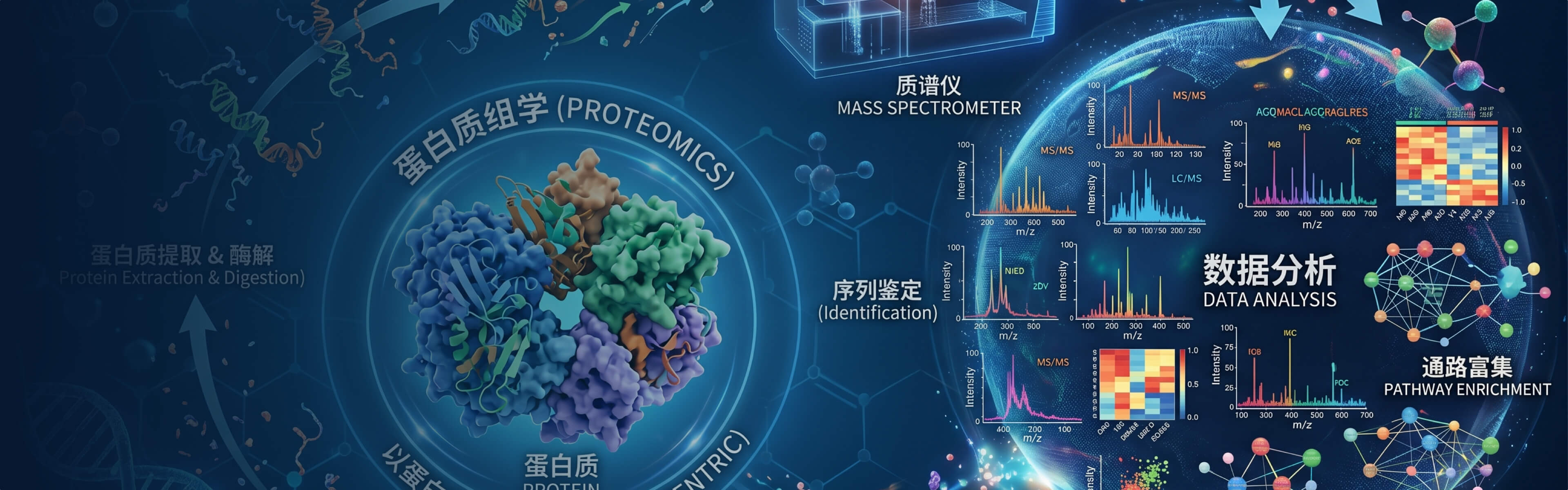
Product Overview
Body fluids, due to their accessibility and ability to reflect the functional status of adjacent organs, have become a major source of biomarkers. Among these, blood (plasma or serum) is the most significant, as it comes into direct contact with almost all organs of the body and can reflect an individual's overall health status. More localized body fluids such as cerebrospinal fluid (CSF), urine, saliva, and nasal mucus reflect functional changes in adjacent organs such as the brain, kidneys, and oral cavity/respiratory tract, respectively.

With the groundbreaking advancements in sample throughput, identification depth, and quantitative analysis capabilities achieved by the next-generation mass spectrometry platform (Astral Zoom), biomarker discovery research has achieved even greater success. The resulting candidate biomarkers have not only withstood independent validation, but in some cases, their detection efficacy has surpassed that of the most advanced clinical testing methods currently available.
Analyzing the composition of body fluids presents numerous challenges, the most difficult being distinguishing between changes caused by disease processes and those caused by nature. Body fluid composition varies due to endogenous (potentially pathological) processes, environmental factors (such as diet and lifestyle), and bodily coping mechanisms (such as metabolism and detoxification). Body fluids are highly complex biological samples, containing cells, proteins, peptides, and various metabolites. For example, in plasma samples, 20 proteins (high abundance) account for 99% of the total protein content, with a dynamic range spanning 10 orders of magnitude. This poses extremely high challenges to sample processing.
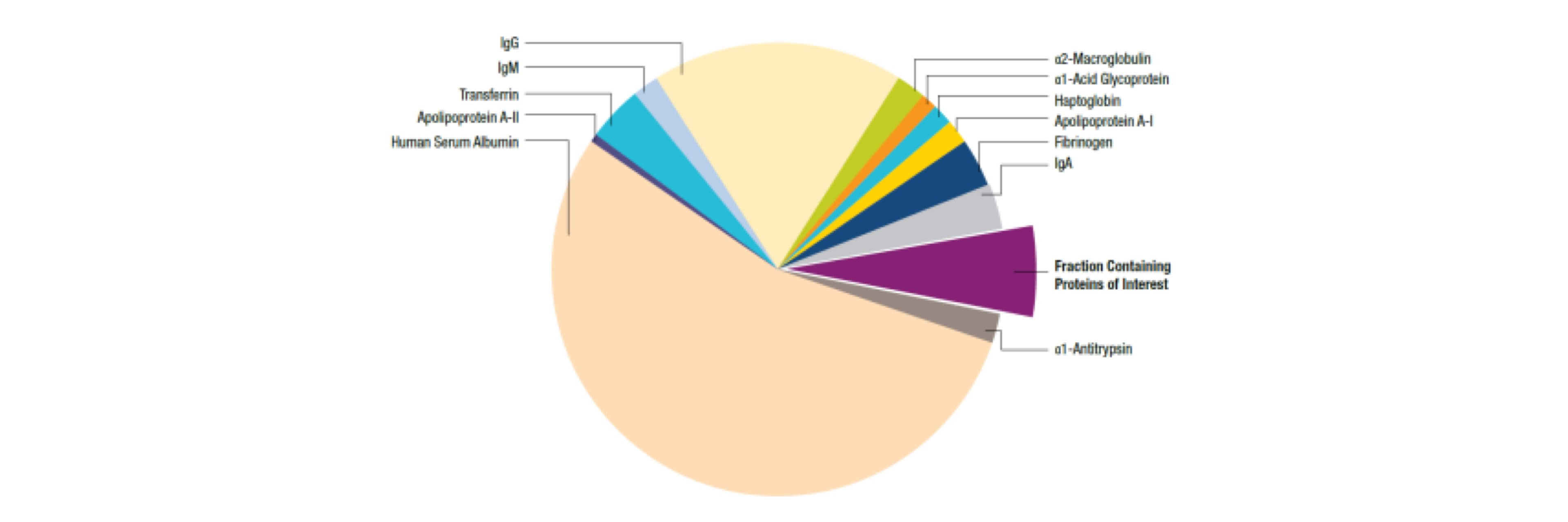
14 types of high-abundance proteins accounted for approximately 95%.
Wininnovate Bio’s self-developed blood low-abundance protein enrichment kit uses special nanomagnetic beads to enrich and separate low-abundance proteins in blood, removing high-abundance proteins that account for more than 95% of the total. It can discover low-abundance biomarkers that cannot be detected by conventional methods, greatly expanding the application value of blood proteomics.
Analysis Process
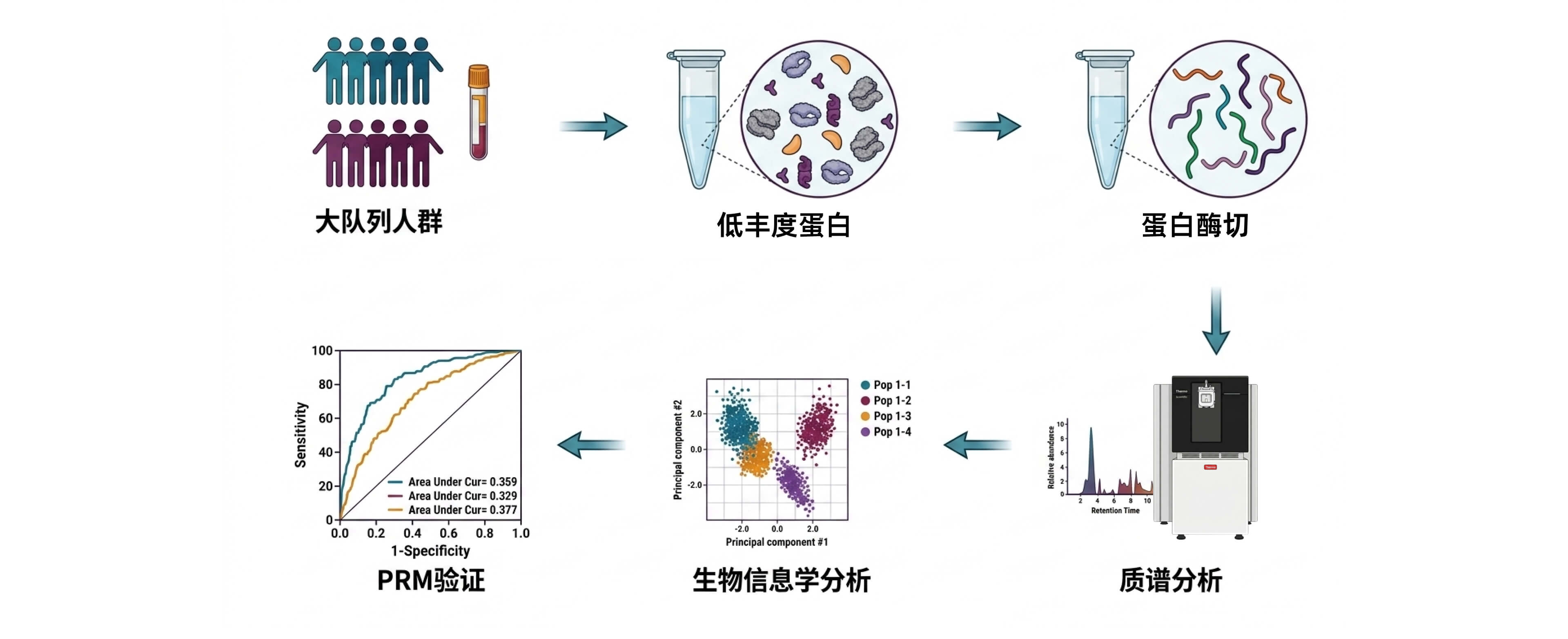
Analysis Process
Reference Cases
A large-cohort pan-cancer proteomics study published in *Nature Biomedical Engineering* by the team of Ding Chen and Ye Dingwei from Fudan University, titled "Cancer biomarkers discovered using pan-cancer plasma proteomic profiling," included clinical samples from 2251 patients (including cancer patients, benign diseases, and healthy controls). High-throughput plasma proteomics analysis was performed, classifying pan-cancer patients into seven proteomic subtypes. Integrating tissue and plasma proteins, 47 core tumor markers were screened. The developed machine learning diagnostic model can effectively distinguish between various cancers and healthy controls, and novel mechanisms were discovered, such as a positive correlation between immune activation and glucose metabolism, and a negative correlation with lipid metabolism.

Discovery Cohort: 1088 cancer patients (17+ tumor types) + 278 benign disease patients + 200 healthy controls.
Independent Validation Cohort: 585 cancer patients + 100 healthy controls (multicenter).
Tissue Samples: FFPE tumor and adjacent normal tissues of 6 tumor types (for tissue-plasma integrated analysis).
Analytical Methods:
- Pan-cancer plasma proteomic mapping and molecular subtyping;
- System-specific proteins and fine biomarkers of tumor subtypes;
- Tissue-plasma integrated screening for core tumor biomarkers;
- Surgical efficacy monitoring and machine learning diagnostic models.
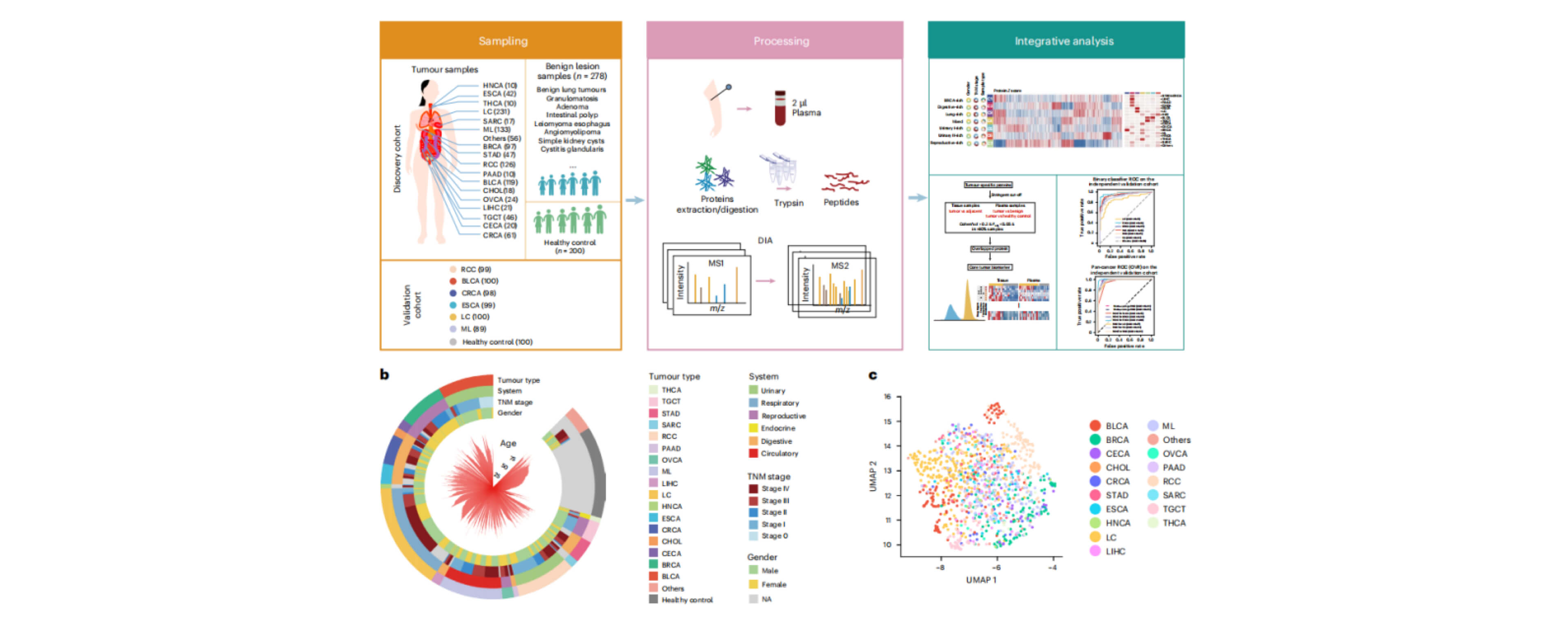
Plasma proteomics analysis of whole cancer samples
Sample Submission Requirements
- Sample Source
- Animals/Clinical
- Sample Type
- Serum/Plasma
- Sample AmountSample Quantity
- 100-300ul, ≥6 in animals, >15 in clinical trials
- Sample Source
- Animals/Clinical
- Sample Type
- Cerebrospinal fluid, Synovial fluid, Lymphatic fluid, Epididymal fluid
- Sample AmountSample Quantity
- 50-200ul, ≥6 in animals, >15 in clinical trials
- Sample Source
- Animals/Clinical
- Sample Type
- Saliva, Tears
- Sample AmountSample Quantity
- 100-500ul, ≥6 in animals, >15 in clinical trials
- Sample Source
- Animals/Clinical
- Sample Type
- Urine
- Sample AmountSample Quantity
- 3-10ml, ≥6 in animals, >15 in clinical trials
- Sample Source
- Animals/Clinical
- Sample Type
- FFPE
- Sample AmountSample Quantity
- 1cm^2, ≥6 in animals, >15 in clinical trials
| Sample Source | Sample Type | Sample AmountSample Quantity |
|---|---|---|
| Animals/Clinical | Serum/Plasma | 100-300ul, ≥6 in animals, >15 in clinical trials |
| Animals/Clinical | Cerebrospinal fluid, Synovial fluid, Lymphatic fluid, Epididymal fluid | 50-200ul, ≥6 in animals, >15 in clinical trials |
| Animals/Clinical | Saliva, Tears | 100-500ul, ≥6 in animals, >15 in clinical trials |
| Animals/Clinical | Urine | 3-10ml, ≥6 in animals, >15 in clinical trials |
| Animals/Clinical | FFPE | 1cm^2, ≥6 in animals, >15 in clinical trials |
References
Bai, Lin et al Cancer biomarkers discovered using pan-cancer plasma proteomic profiling. Nature biomedical engineering, 2026;16-38.DOI: 10.1038/s41551-025-01448-y
Karayel, Ozge et al Proteome profiling of cerebrospinal fluid reveals biomarker candidates for Parkinson's disease bioRxiv, 2021;.DOI: 10.1101/2021.07.22.453322
Khoo, Amanda et al Prostate cancer reshapes the secreted and extracellular vesicle urinary proteomes Nature communications, 2024;15,1 5069.

Shenzhen Wininnovate Bio Co., Ltd.
Innovative mass spectrometry and AI technologies provide protein and metabolite mass spectrometry multi-omics solutions for life science research, empowering the growth of the biotechnology, pharmaceutical, and healthcare industries.


