


Product Overview
Food peptidomics is a high-throughput analytical method based on liquid chromatography-tandem mass spectrometry (LC-MS/MS) and bioinformatics. It is used to systematically identify the composition, sequence, and modifications of endogenous or enzymatically generated peptides in food raw materials and processed products. This technology can deeply analyze bioactive peptides (such as antioxidant and antihypertensive peptides), allergenic peptides, and flavor peptides in food protein degradation products, and track their dynamic changes during processing and storage, providing precise molecular-level evidence for functional food development, food safety control, and quality traceability.

Peptidomics Mechanism Schematic
Technical Process
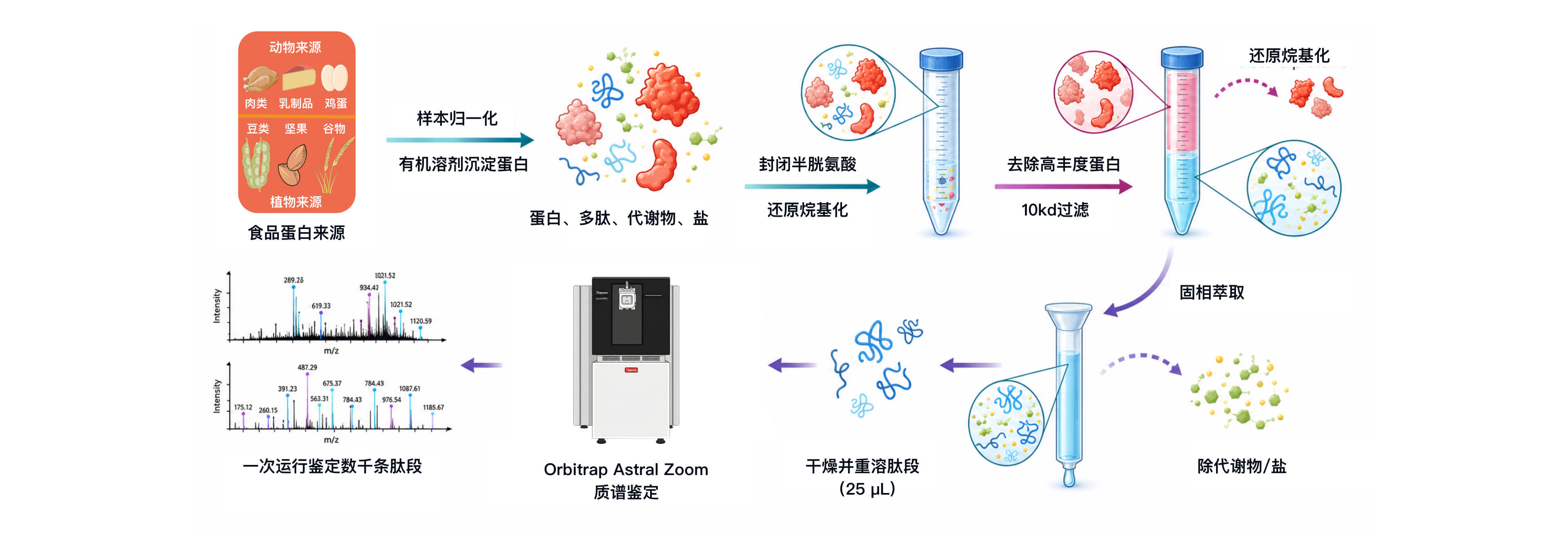
Schematic diagram of peptidomics process route
Applications
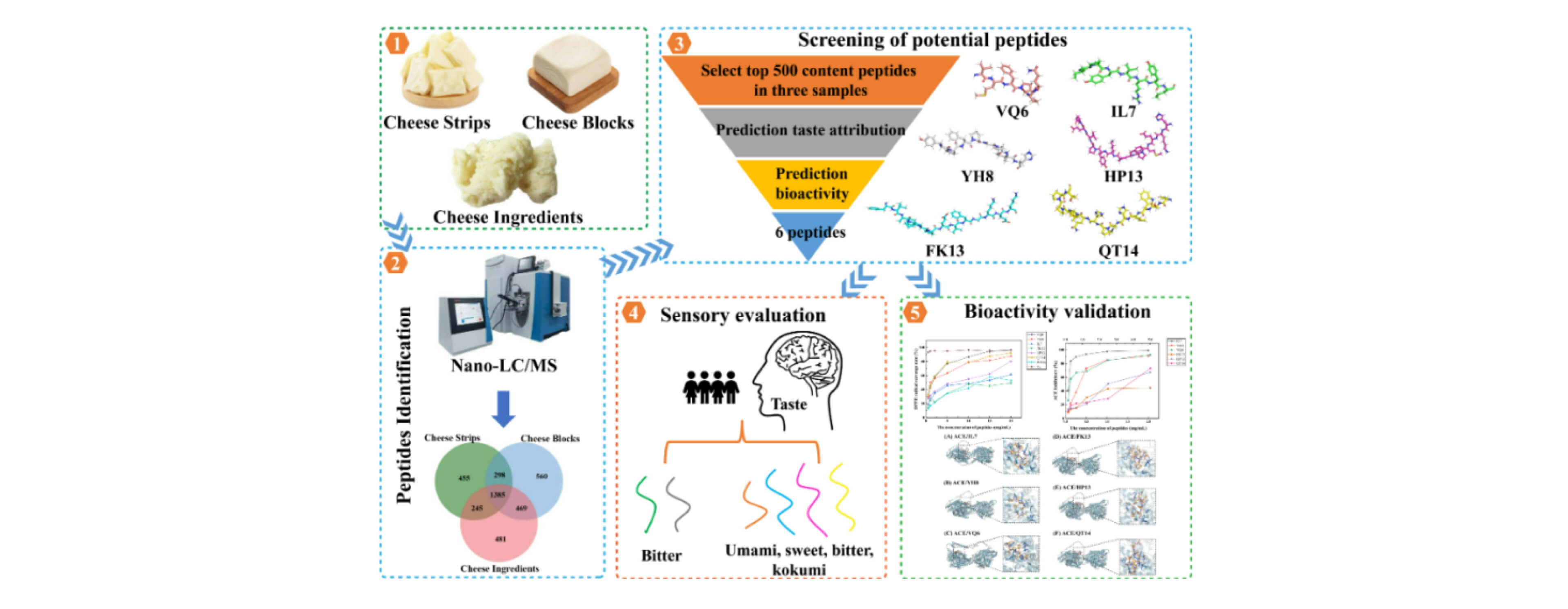
Title:Exploration of multi-functional peptides with bioactive and flavorful properties in Inner Mongolian cheese by peptidomics and bioinformatics
Impact Factor:7.4
Year:2025
Research Content:This study utilized peptidomics and virtual screening to systematically screen and validate the functions of water-soluble peptides in traditional Inner Mongolian cheese, discovering multifunctional peptides that possess both flavor (umami, bitterness, kokumi) and biological activity (antioxidant, ACE inhibition). Thousands of peptides were identified, and six representative polypeptides (YH8, IL7, VQ6, FK13, HP13, and QT14) were selected. In vitro activity tests showed that all six peptides possessed certain antioxidant and ACE inhibitory capabilities, with the bitter peptides IL7 (IC₅₀ = 0.08 mmol/L) and YH8 (IC₅₀ = 0.33 mmol/L) exhibiting the strongest ACE inhibitory activity. This research confirms that these naturally occurring flavor peptides in Inner Mongolian cheese also possess health-regulating functions, providing a theoretical basis and candidate peptide library for developing functional foods with both delicious and health-promoting properties.
Sample Submission Requirements
- Sample
- Cell
- Specification
- 1*10^7/ set
- Sample
- Bacteria
- Specification
- OD600~0.6 /set
- Sample
- Serum/Plasma
- Specification
- 200 uL
- Sample
- Tissue
- Specification
- ≥200 mg in animals, ≥3 g in plants
- Sample
- Urine
- Specification
- 5 mL
| Sample | Specification |
|---|---|
| Cell | 1*10^7/ set |
| Bacteria | OD600~0.6 /set |
| Serum/Plasma | 200 uL |
| Tissue | ≥200 mg in animals, ≥3 g in plants |
| Urine | 5 mL |
References
Foreman RE, George AL, Reimann F, et al Peptidomics: A Review of Clinical Applications and Methodologies J Proteome Res, 2021;20(8):3782-3797.DOI: 10.1021/acs.jproteome.1c00295
Li L, Wu J, Lyon CJ, et al Clinical Peptidomics: Advances in Instrumentation, Analyses, and Applications BME Front, 2023;4:0019.DOI: 10.34133/bmef.0019
ZHENG Y, CUI Z, WANG S, et al Exploration of multi-functional peptides with bioactive and flavorful properties in Inner Mongolian cheese by peptidomics and bioinformatics[J] Food Science and Human Wellness, 2025;14(9): 9250377.DOI: 10.26599/FSHW.2024.9250377

Shenzhen Wininnovate Bio Co., Ltd.
Innovative mass spectrometry and AI technologies provide protein and metabolite mass spectrometry multi-omics solutions for life science research, empowering the growth of the biotechnology, pharmaceutical, and healthcare industries.


