

Product Overview
With the advancement of protein analysis technology and mass spectrometry performance, DIA quantification methods in proteomics have evolved from the initial DIA to 4D-DIA and then to Astral Zoom DIA. Data analysis has also progressed from initially referencing DDA spectral libraries to database-independent retrieval and then to combining machine learning to assist in the analysis of raw DIA mass spectrometry spectra. This has enabled DIA quantification to combine the advantages of high throughput, high depth, and high accuracy, making it the mainstream analytical technique in proteomics analysis. Its application range covers routine samples, clinical samples, trace samples, and single-cell samples.
DDA & DIA
The DDA method randomly selects and prefers peptides with high signal intensity for fragmentation and data acquisition, making the identification and quantification of low-abundance peptides a significant challenge. The DIA method divides all peptides into several windows based on molecular weight, without distinguishing peptides within each window by abundance. All peptides within a window are fragmented and data acquired together, ensuring comprehensive and consistent mass spectrometry data collection for all peptides.
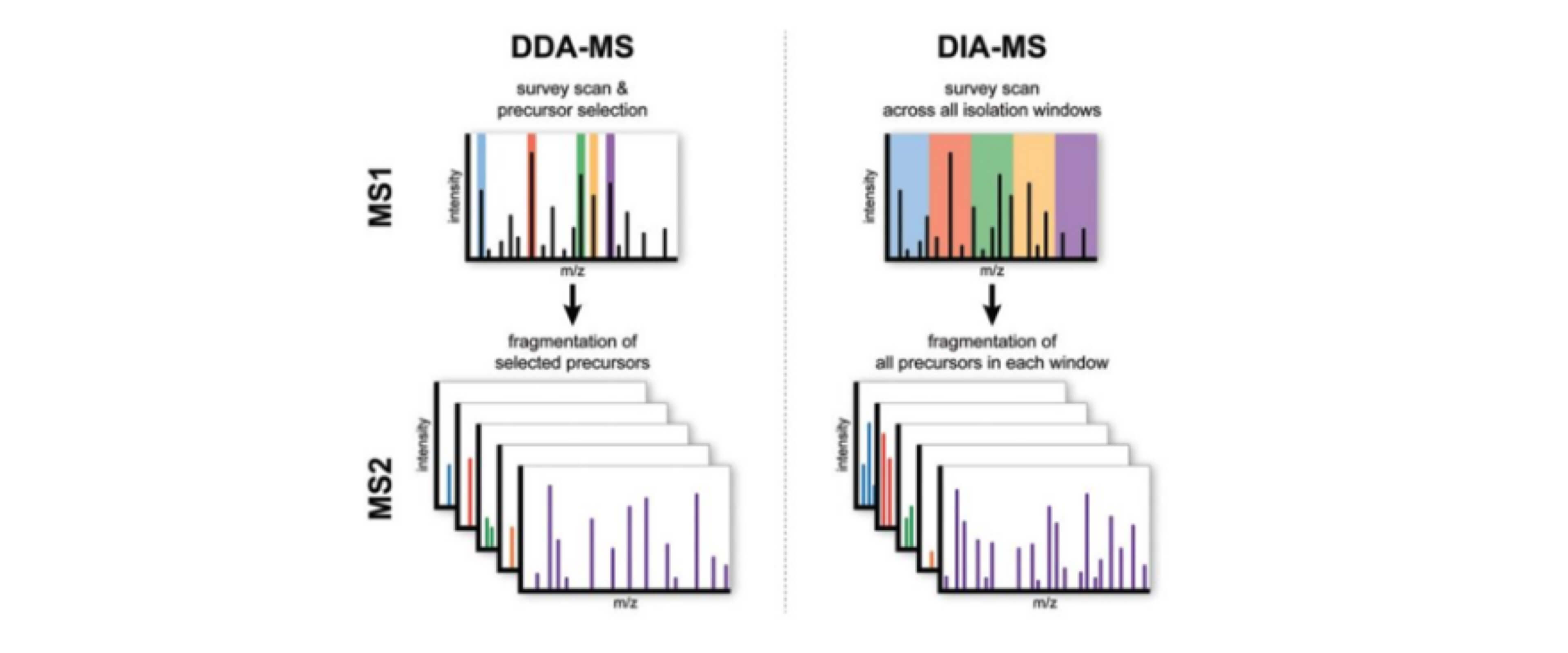
Schematic diagrams of DDA and DIA methods. All mass spectra acquired by DDA originate from high-abundance single peptides, while DIA acquires mixed peptide spectra containing low-abundance peptides
Pro-DIA(4D)
Pro-DIA (4D) is a DIA technology based on the timsTOF HT ion mobility platform. It adds a fourth dimension—ion mobility—to traditional DIA. Ion mobility primarily separates ions based on their shape and cross-section, enabling the differentiation of peptides with very small m/z differences, thus allowing the identification and recognition of low-abundance protein signals. Combining PASEF (Parallel Accumulation Serial Fragmentation) and TIMS (Ion Mobility Spectroscopy), Pro-DIA allows for repeated measurement of the collision cross-section (CCS) of all detected ions, enabling faster and more sensitive qualitative and quantitative proteomics analysis. Compared to traditional methods, it comprehensively improves protein identification coverage, reproducibility, and quantitative accuracy.
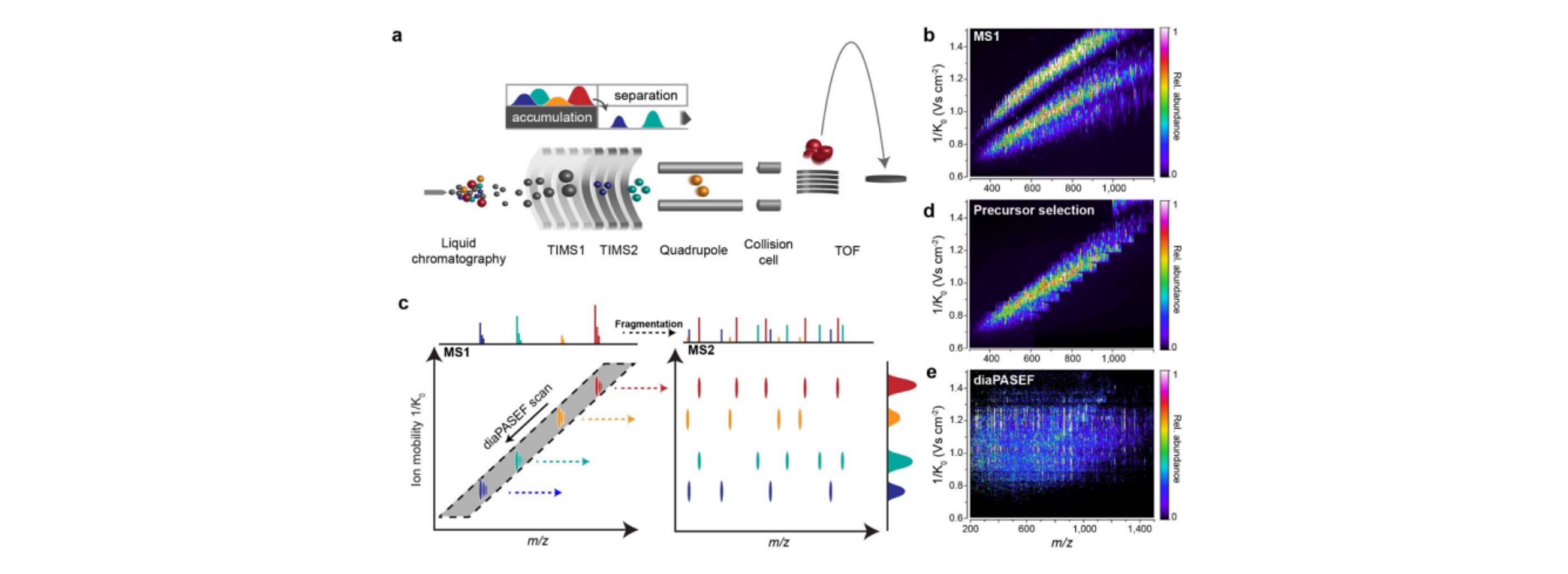
4D-DIA Analysis Flowchart
Plus-DIA(Zoom)
Astral Zoom, an upgraded version of Astral, achieves a perfect balance of high throughput, deep coverage, high sensitivity, and high reliability in quantification. The Plus-DIA quantitative omics platform enables deeper identification with fewer samples, supporting more comprehensive protein sequence coverage and pathway annotation, thereby revealing more biological information.

Compared to the Astral mass spectrometer, the Astral Zoom mass spectrometer offers greater depth of coverage for proteins and peptides.
(Data source: Official website)
Analysis Process
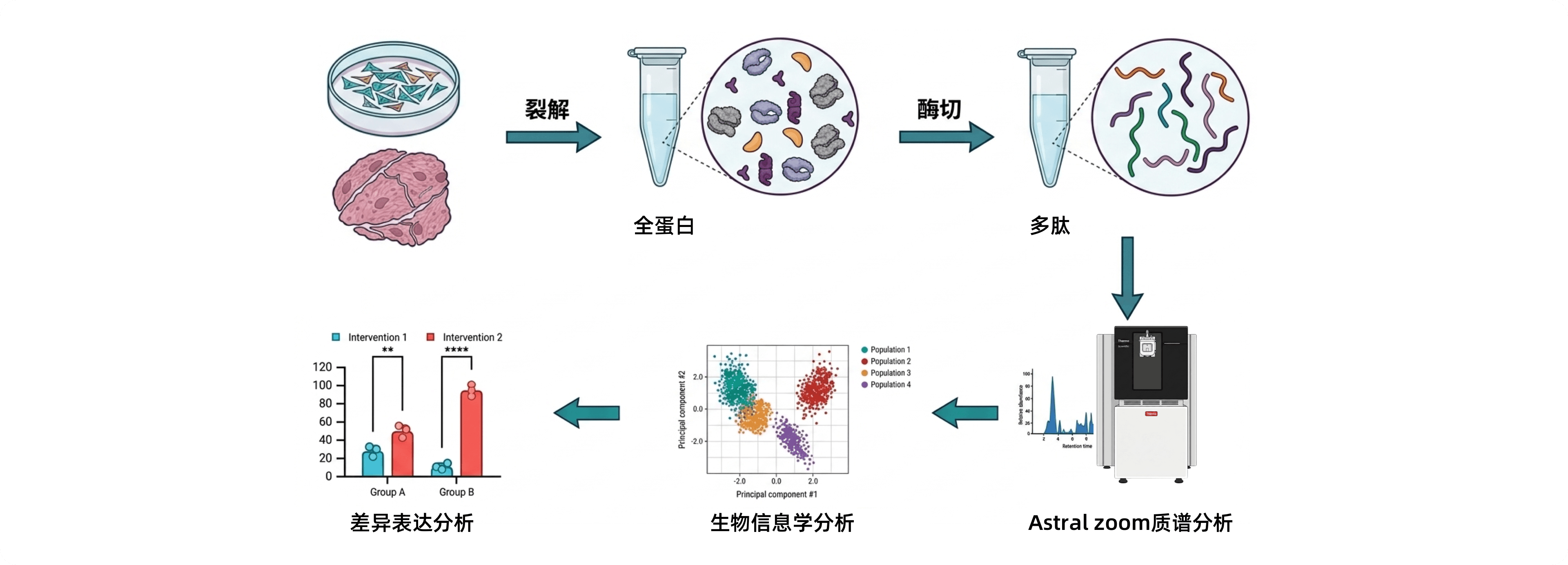
Pro Quantitative Proteomics Analysis Process
Sample Submission Requirements
- Sample Type
- Suspension Culture Cells
- Sample Quantity
- 0.5-10 million, repeated ≥3 times
- Sample Type
- Adherent Cell Culture
- Sample Quantity
- 0.5-10 million, repeated ≥3 times
- Sample Type
- Cell Culture Supernatant
- Sample Quantity
- 5-10 mL, repeated ≥3 times
- Sample Type
- Soft Tissues (brain, liver, muscles, etc.)
- Sample Quantity
- 10-50mg, ≥6 in animals, >15 in clinical trials
- Sample Type
- Molluscs (nematodes, schistosomes, etc.)
- Sample Quantity
- 50-100mg, ≥6 in animals, >15 in clinical trials
- Sample Type
- Adipose Tissue (white)
- Sample Quantity
- 0.1-1g, ≥6 in animals, >15 in clinical trials
- Sample Type
- Tough Tissue - Cartilage
- Sample Quantity
- 50-200mg, ≥6 in animals, >15 in clinical trials
- Sample Type
- Tough Tissue - Bone
- Sample Quantity
- 0.1-1g, ≥6 in animals, >15 in clinical trials
- Sample Type
- Tough Tissue - Hair
- Sample Quantity
- 50-200mg, ≥6 in animals, >15 in clinical trials
- Sample Type
- Serum/Plasma
- Sample Quantity
- 100-300ul, ≥6 in animals, >15 in clinical trials
- Sample Type
- Cerebrospinal fluid, Synovial fluid, Lymphatic fluid, Epididymal fluid
- Sample Quantity
- 50-200ul, ≥6 in animals, >15 in clinical trials
- Sample Type
- Saliva, Tears
- Sample Quantity
- 100-500ul, ≥6 in animals, >15 in clinical trials
- Sample Type
- Urine
- Sample Quantity
- 3-10ml, ≥6 in animals, >15 in clinical trials
- Sample Type
- FFPE
- Sample Quantity
- 10µm × 1cm^2,≥6 in animals, >15 in clinical trials
- Sample Type
- Plant Soft Tissue
- Sample Quantity
- 100-500mg, repeated ≥6 times
- Sample Type
- Woody tree roots, bark, branches, etc.
- Sample Quantity
- 0.3-1g, repeated ≥6 times
- Sample Type
- Fruits, Seeds
- Sample Quantity
- 100-200mg, repeated ≥6 times
- Sample Type
- Pollen
- Sample Quantity
- 50-100mg, repeated ≥6 times
- Sample Type
- Fungi (fungal cell sediment)
- Sample Quantity
- 10-50 million doses / 0.1-2g, repeat ≥3 times
| Sample Type | Sample Quantity |
|---|---|
| Suspension Culture Cells | 0.5-10 million, repeated ≥3 times |
| Adherent Cell Culture | 0.5-10 million, repeated ≥3 times |
| Cell Culture Supernatant | 5-10 mL, repeated ≥3 times |
| Soft Tissues (brain, liver, muscles, etc.) | 10-50mg, ≥6 in animals, >15 in clinical trials |
| Molluscs (nematodes, schistosomes, etc.) | 50-100mg, ≥6 in animals, >15 in clinical trials |
| Adipose Tissue (white) | 0.1-1g, ≥6 in animals, >15 in clinical trials |
| Tough Tissue - Cartilage | 50-200mg, ≥6 in animals, >15 in clinical trials |
| Tough Tissue - Bone | 0.1-1g, ≥6 in animals, >15 in clinical trials |
| Tough Tissue - Hair | 50-200mg, ≥6 in animals, >15 in clinical trials |
| Serum/Plasma | 100-300ul, ≥6 in animals, >15 in clinical trials |
| Cerebrospinal fluid, Synovial fluid, Lymphatic fluid, Epididymal fluid | 50-200ul, ≥6 in animals, >15 in clinical trials |
| Saliva, Tears | 100-500ul, ≥6 in animals, >15 in clinical trials |
| Urine | 3-10ml, ≥6 in animals, >15 in clinical trials |
| FFPE | 10µm × 1cm^2,≥6 in animals, >15 in clinical trials |
| Plant Soft Tissue | 100-500mg, repeated ≥6 times |
| Woody tree roots, bark, branches, etc. | 0.3-1g, repeated ≥6 times |
| Fruits, Seeds | 100-200mg, repeated ≥6 times |
| Pollen | 50-100mg, repeated ≥6 times |
| Fungi (fungal cell sediment) | 10-50 million doses / 0.1-2g, repeat ≥3 times |

Shenzhen Wininnovate Bio Co., Ltd.
Innovative mass spectrometry and AI technologies provide protein and metabolite mass spectrometry multi-omics solutions for life science research, empowering the growth of the biotechnology, pharmaceutical, and healthcare industries.


