

Product Overview
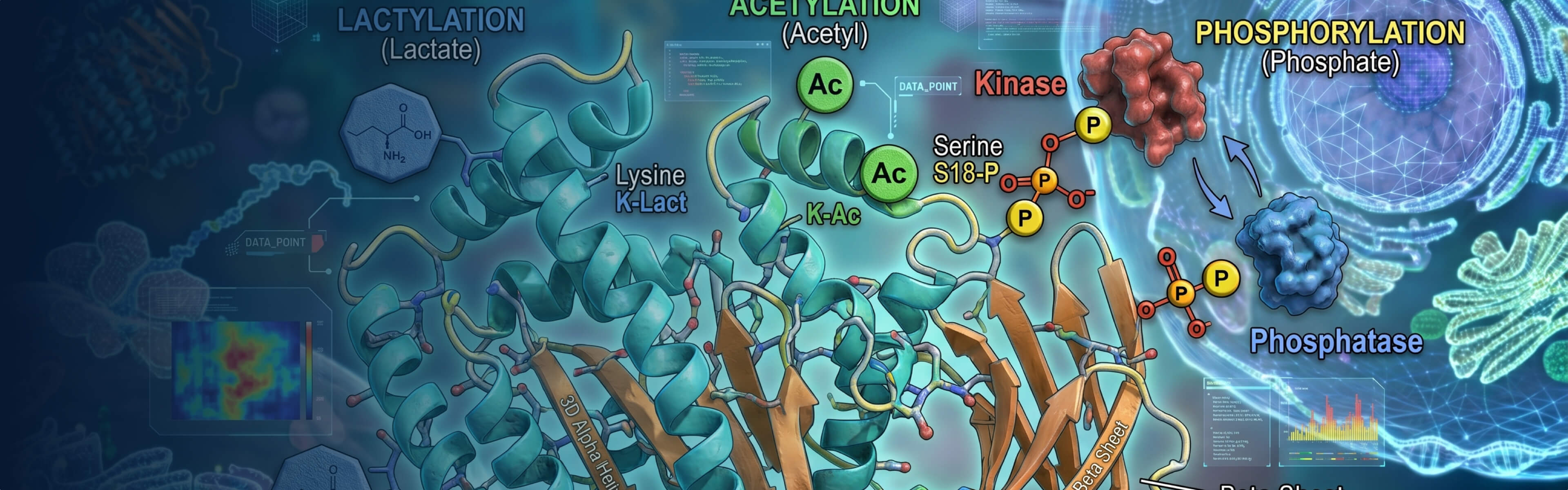
Ubiquitinomics is a high-throughput, systematic omics analysis technique targeting protein ubiquitination modifications. It can comprehensively identify and quantify the dynamic changes of thousands to tens of thousands of ubiquitination sites within cells, deeply revealing the molecular mechanisms by which the ubiquitin-proteasome system (UPS) regulates various key life activities, including protein degradation, cell cycle progression, DNA damage repair, signal transduction, immune response, and transcriptional regulation. By precisely capturing the spatiotemporal dynamics of ubiquitination modifications, this technique helps researchers systematically analyze the regulatory networks of protein homeostasis imbalances under physiological or pathological conditions. It has wide applications in cutting-edge research fields such as tumor pathogenesis and drug resistance research, exploration of the pathological mechanisms of neurodegenerative diseases (e.g., Alzheimer's and Parkinson's diseases), regulation of autoimmune diseases, infection and immune responses, plant development and stress resistance, as well as the discovery of innovative drug targets and the screening of precision medicine biomarkers. It provides crucial data support and technical backing for basic scientific research and clinical translational applications.
Technical Process
The principle of ubiquitination enrichment: using monoclonal antibodies that specifically recognize the K-ε-GG epitope to selectively capture peptides containing diglycine tags produced after trypsin digestion.
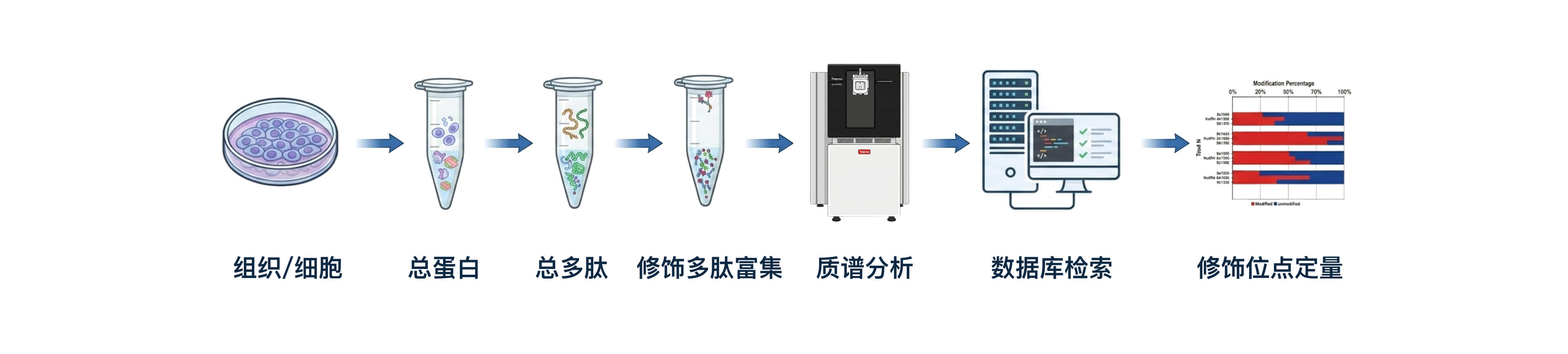
Schematic diagram of ubiquitination modification omics process route
Data Display
English Title:Integrative proximal-ubiquitomics profiling for deubiquitinase and E3 ligase substrate discovery applied to USP30
Impact Factor:7-8
Journal:Cell Chemical Biology
Research Content: This study developed a novel approach integrating proximity labeling and ubiquitination enrichment—proximal-ubiquitomics—combining APEX2 proximity labeling technology with K-ε-GG antibody enrichment for the precise identification of substrates for deubiquitinases (DUB) and E3 ubiquitin ligases. Experimental results confirmed by ubiquitination modification proteomics showed that this method successfully captured ubiquitinated proteins in the microenvironment of the mitochondrial deubiquitinase USP30, effectively distinguishing direct substrates from downstream secondary effects. The study identified candidate substrates for USP30, providing new insights into mitochondrial quality control mechanisms and overcoming the limitation of traditional K-ε-GG methods in distinguishing between direct enzyme substrates and indirect effects.
-修饰组学@2x.jpg)
English Title:Comparative ubiquitinome analysis reveals the roles of ubiquitination in heat stress response in Metarhizium robertsii
Impact Factor:4-6
Journal:Appl Environ Microbiol
Research Content:This study established a ubiquitination profiling workflow for the entomopathogenic fungus *Metarhizium anisopliae*, systematically elucidating the ubiquitination regulatory network in response to heat stress. Experimental results confirmed by ubiquitination modification profiling revealed 22,873 ubiquitination sites, covering 4,722 proteins, after enrichment with agarose beads coupled with anti-K-ε-GG antibody. Under heat stress, 3,419 ubiquitination sites were significantly upregulated, involving key pathways such as glycolysis and the proteasome. DIA mass spectrometry analysis revealed the regulatory mechanism of ubiquitination modification in fungal heat stress adaptation.
-修饰组学@2x.jpg)
Sample Submission Requirements
- Sample
- Routine Animal Tissues (brain, liver, spleen, lung, kidney, muscle, etc.)
- Specification
- 300mg-1g
- Remark
- Sample
- Plant Tissues (leaves, flowers, etc.)
- Specification
- 5-10g
- Remark
- For high-moisture/high-polysaccharide tissues (such as fruits, tubers, and mature leaves), the sample size should be 10-15g.
- Sample
- cell
- Specification
- 10^8
- Remark
| Sample | Specification | Remark |
|---|---|---|
| Routine Animal Tissues (brain, liver, spleen, lung, kidney, muscle, etc.) | 300mg-1g | |
| Plant Tissues (leaves, flowers, etc.) | 5-10g | For high-moisture/high-polysaccharide tissues (such as fruits, tubers, and mature leaves), the sample size should be 10-15g. |
| cell | 10^8 |
References
Damianou A, Jones HBL, Grigoriou A, Akbor MA, Jenkins E, Charles PD, Vendrell I, Davis S, Kessler BM Integrative proximal-ubiquitomics profiling for deubiquitinase substrate discovery applied to USP30 Cell Chem Biol, 2025 May;15;32(5):736-751.e8.DOI: 10.1016/j.chembiol.2025.04.004. Epub 2025 May 5. PMID: 40328249
Song J, Raza A, Chen H, Li G, Huang B, Wang Z Comparative ubiquitinome analysis reveals the roles of protein ubiquitination in the heat stress response from Metarhizium robertsii Appl Environ Microbiol, 2025 Dec 23;91(12):e0146825.DOI: 10.1128/aem.01468-25. Epub 2025 Dec 1. PMID: 41324547; PMCID: PMC12724308.

Shenzhen Wininnovate Bio Co., Ltd.
Innovative mass spectrometry and AI technologies provide protein and metabolite mass spectrometry multi-omics solutions for life science research, empowering the growth of the biotechnology, pharmaceutical, and healthcare industries.


