


Product Overview
LiP-MS (Limited Proteolysis Mass Spectrometry) is a mass spectrometry-based structural proteomics technique primarily used for high-throughput, label-free detection of protein conformational changes, drug target identification, and the effects of post-translational modifications (PTM). Its core principle is that when a drug or ligand binds to a target protein, it induces a local conformational change, thereby affecting the cleavage efficiency of broad-spectrum proteases (such as proteinase K) on specific regions. By quantitatively comparing the peptide abundance differences between the treated and control groups using mass spectrometry, proteins undergoing binding or conformational changes and their binding regions can be accurately identified. This technique requires no chemical modification of the drug, enables high-throughput screening of directly acting targets under near-physiological conditions, and provides binding site information, thus playing a crucial role in drug target discovery, protein-protein interaction networks, and disease biomarker research.
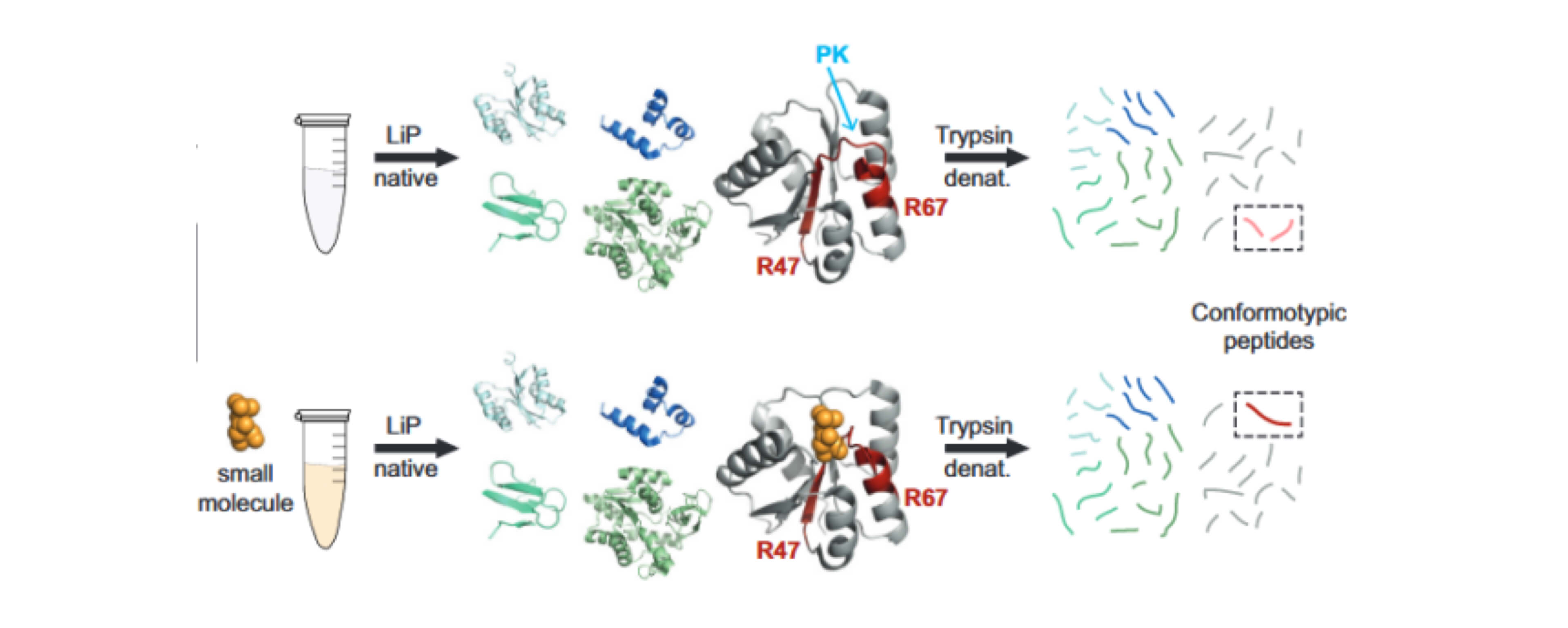
LiP-MS Schematic Diagram
Technical Process
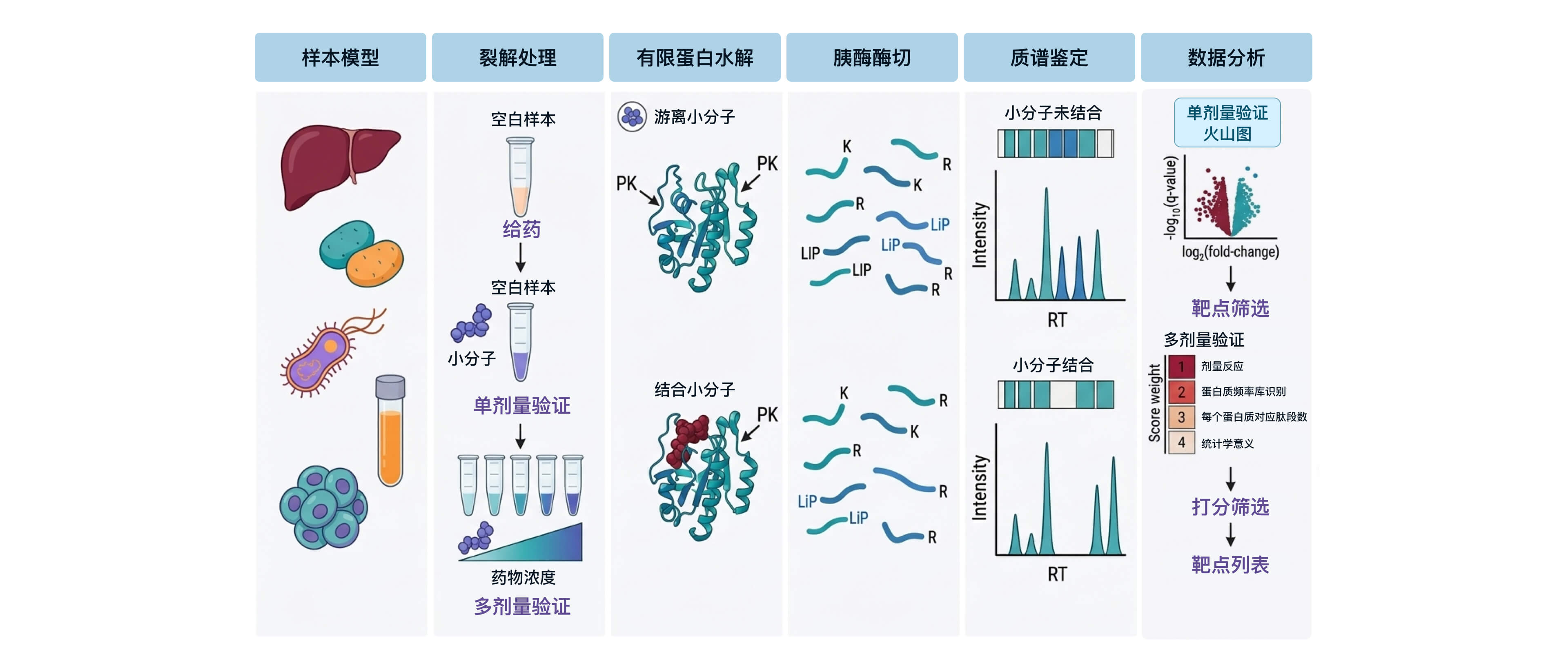
Schematic diagram of LiP-MS process route
Case Studies
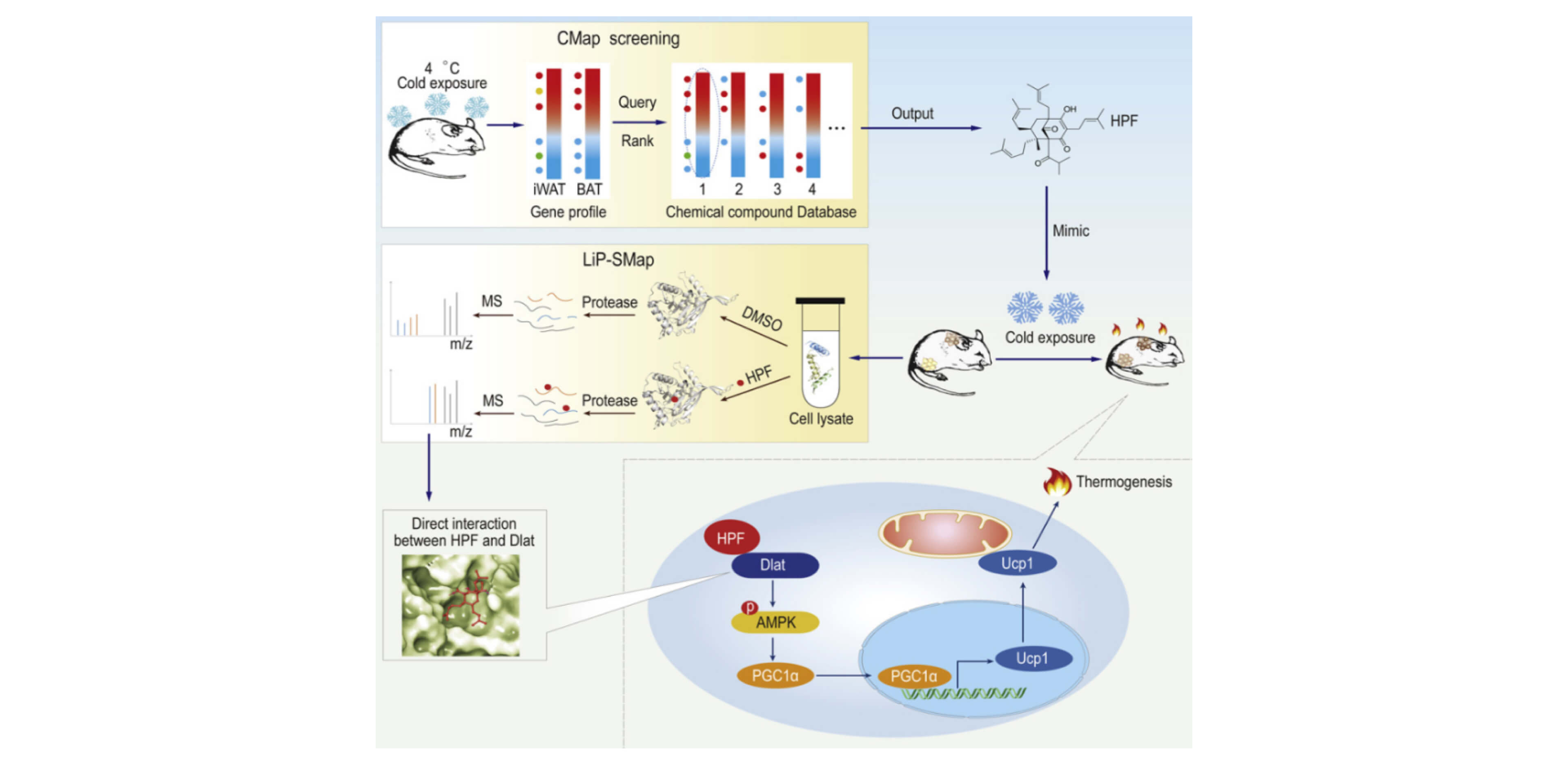
English Title:The phytochemical hyperforin triggers thermogenesis in adipose tissue via a Dlat-AMPK signaling axis to curb obesity
Impact Factor:30.9
Journal:Cell Metabolism
Research Content:This study used Connectivity Map to screen for the natural compound Hypericin, which can mimic the expression profile of thermogenic genes in adipose tissue induced by cold exposure. In vitro and in vivo experiments confirmed that HPF can activate the AMPK-PGC1α-Ucp1 signaling axis, promoting the browning of white adipose tissue and the activation of brown adipose tissue, thereby inhibiting obesity. To elucidate its direct molecular target, the authors used LiP-MS (Limited Proteolysis Mass Spectrometry) to analyze HPF-treated adipocyte lysates. They ultimately identified dihydrolipoamide S-acetyltransferase (Dlat) as the direct binding protein of HPF. Micro-thermophoresis, molecular docking, and domain deletion mutation experiments verified that the C-terminal inner domain (I domain) of Dlat is a key region necessary for HPF binding and AMPK activation.
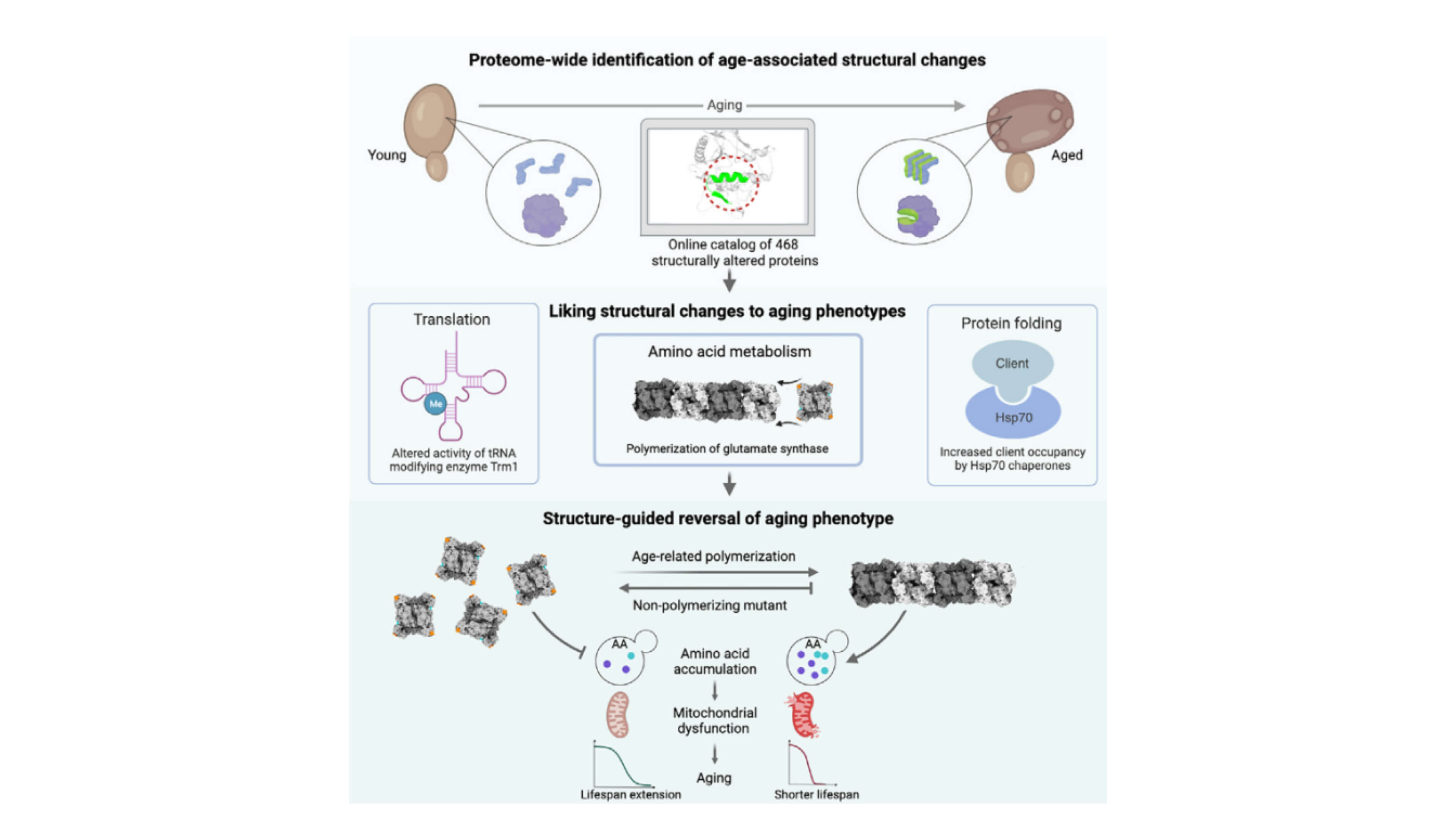
English Title:Global analysis of aging-related protein structural changes uncovers enzyme-polymerization-based control of longevity
Impact Factor:16.6
Journal:Molecular Cell
Research Content:This study used LiP-MS (Limited Proteolysis Mass Spectrometry) to systematically analyze global changes in protein structure during the aging process of Saccharomyces cerevisiae. A total of 468 proteins with age-related structural changes were identified, mainly enriched in pathways such as translation, protein homeostasis, and amino acid metabolism. By locating structural change regions using LiP-MS, it was found that glutamate synthase Glt1 undergoes reversible polymerization through its conserved interface in senescent cells, leading to intracellular amino acid imbalance, impaired mitochondrial function, and shortened lifespan. Blocking Glt1 polymerization, however, restored amino acid homeostasis, improved mitochondrial function, and extended lifespan.
Sample Submission Requirements
- Sample
- Cell
- Specification
- T75 / set
- Remark
- 1*10^7/ set
- Sample
- Bacteria
- Specification
- OD600~0.6 / set
- Remark
- Sample
- Tissue
- Specification
- 100mg / set
- Remark
- Sample
- Small Molecule Drugs
- Specification
- 100 mM,50 uL
- Remark
- The dosage concentration and preparation solvent must be provided.
- Sample
- DMSO
- Specification
- 50 uL
- Remark
| Sample | Specification | Remark |
|---|---|---|
| Cell | T75 / set | 1*10^7/ set |
| Bacteria | OD600~0.6 / set | |
| Tissue | 100mg / set | |
| Small Molecule Drugs | 100 mM,50 uL | The dosage concentration and preparation solvent must be provided. |
| DMSO | 50 uL |
References
Piazza I, Kochanowski K, Cappelletti V, et al A Map of Protein-Metabolite Interactions Reveals Principles of Chemical Communication Cell, 2018;172(1-2):358-372.e23.DOI: 10.1016/j.cell.2017.12.006
Holfeld A, Quast JP, Bruderer R, et al Limited Proteolysis-Mass Spectrometry to Identify Metabolite-Protein Interactions. Methods Mol Biol Methods Mol Biol, 2023;2554:69-89.DOI: 10.1007/978-1-0716-2624-5_6
Chen S, Liu X, Peng C, et al The phytochemical hyperforin triggers thermogenesis in adipose tissue via a Dlat-AMPK signaling axis to curb obesity Cell Metab, 2021;33(3):565-580.e7.DOI: 10.1016/j.cmet.2021.02.007
Paukštytė J, López Cabezas RM, Feng Y, et al Global analysis of aging-related protein structural changes uncovers enzyme-polymerization-based control of longevity Mol Cell, 2023;83(18):3360-3376.e11.DOI: 10.1016/j.molcel.2023.08.015. Epub 2023 Sep 11

Shenzhen Wininnovate Bio Co., Ltd.
Innovative mass spectrometry and AI technologies provide protein and metabolite mass spectrometry multi-omics solutions for life science research, empowering the growth of the biotechnology, pharmaceutical, and healthcare industries.


