


Product Overview
LC-MS (Liquid Chromatography-Mass Spectrometry) is an unbiased detection technique designed for comprehensive and systematic analysis of all endogenous small molecule metabolites in biological samples. Utilizing a high-throughput, high-sensitivity LC-MS platform combined with advanced bioinformatics methods, this technique can discover novel metabolites, reveal potential biomarkers, and elucidate complex metabolic regulatory networks.
Technical Advantages
1. Ultra-high sensitivity analysis: Utilizing the latest generation of high-resolution mass spectrometers (such as the Orbitrap Astral Zoom/Q-Exactive HF) combined with optimized chromatographic separation conditions, it achieves precise capture of low-abundance metabolites, with a detection dynamic range exceeding four orders of magnitude.
2. Comprehensive database coverage: Integrating a self-built high-standard secondary mass spectrometry library (containing over 10,000 metabolites) with public databases (such as Metlin, Lipidmaps, HMDB, etc.), ensuring the accuracy and reliability of qualitative results.
3. Rigorous quality control system: Monitoring the entire analytical process using QC samples, blank samples, and internal standards ensures data quality stability and batch-to-batch reproducibility.
Technical Process
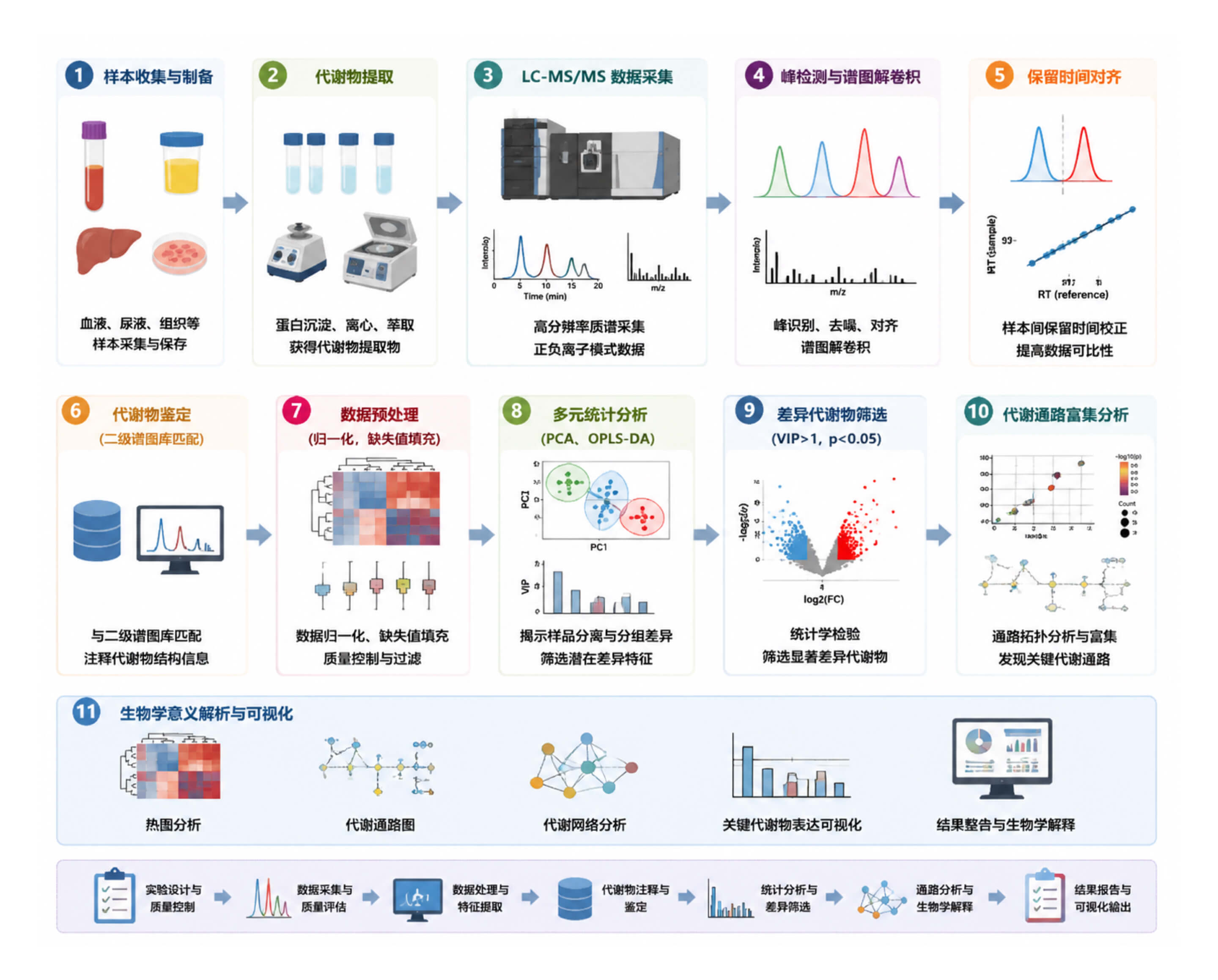
Key Processing Nodes
1. Sample Pretreatment: Optimized extraction protocols are used based on sample type (tissue, serum, cells, etc.) to efficiently precipitate proteins and extract metabolites.
2. Data Acquisition: Data-dependent acquisition (DDA) mode is employed, collecting data in both positive and negative ion modes to maximize metabolite coverage.
3. Metabolite Identification: Based on accurate mass numbers, isotope distribution, and secondary fragment ion spectra, matching is performed with self-built libraries and public spectral libraries.
4. Bioinformatics Analysis: Provides over 10 standard analytical functions, including principal component analysis (PCA), orthogonal partial least squares discriminant analysis (OPLS-DA), volcano plots, heatmaps, cluster analysis, and KEGG pathway enrichment, and supports personalized advanced analysis.
Case Studies
Case Studies:Xiong F, Zhang X, Jiang Y, et al. An Integrated Analysis of the Role of Gut Microbiome-Associated Metabolites in the Detection of MASH-Related Cirrhosis. Metabolites. 2024;14(12):681.
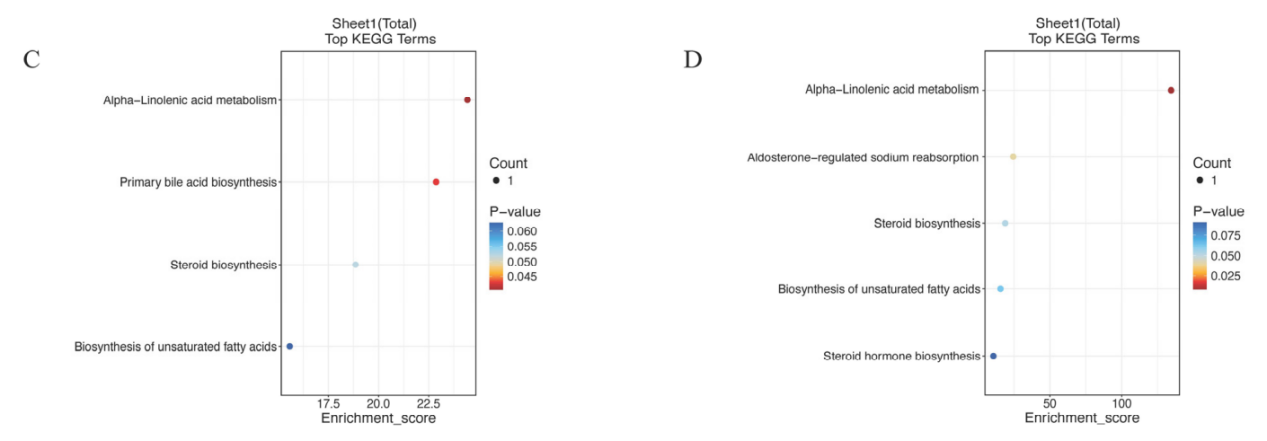
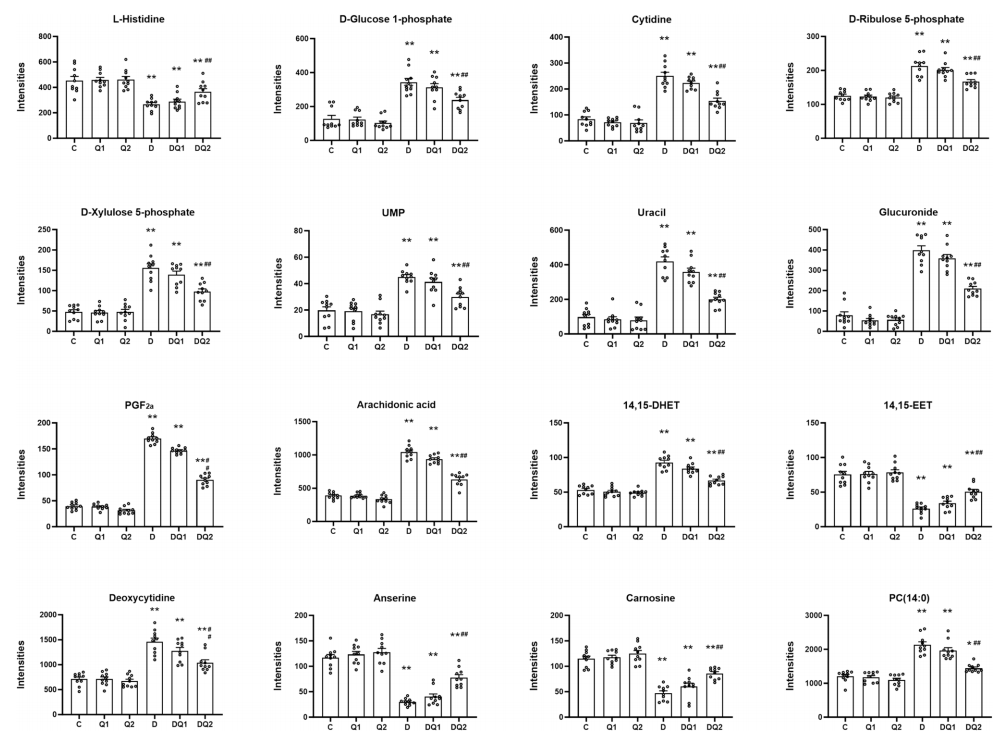
Case Studies:Hou Y, Li Y, Li J, Zhao X. Untargeted metabolomics revealed that quercetin improves rat renal metabolic disorders induced by chronic unpredictable mild stress. Naunyn-Schmiedeberg's Archives of Pharmacology. 2025;398:14257-14271.
Sample Submission Requirements
- Sample Type
- Serum/Plasma
- Minimum Sample Quantity
- ≥200 μL
- Storage & Transportation Conditions
- Store at -80℃ and transport with dry ice.
- Precautions
- To avoid hemolysis, it is recommended to aliquot and freeze, and avoid repeated freeze-thaw cycles.
- Sample Type
- Animal Tissue
- Minimum Sample Quantity
- ≥50 mg
- Storage & Transportation Conditions
- Flash-freeze with liquid nitrogen, store at -80°C, transport with dry ice.
- Precautions
- Place the sample in liquid nitrogen as soon as possible after sampling (<30 minutes).
- Sample Type
- Urine
- Minimum Sample Quantity
- ≥500 μL
- Storage & Transportation Conditions
- Store at -80℃ and transport with dry ice.
- Precautions
- It is recommended to use first morning urine or a mixture of urine from 24 hours.
- Sample Type
- Cells / Microbes
- Minimum Sample Quantity
- ≥1×10⁷ cell
- Storage & Transportation Conditions
- Collect the precipitate after quenching metabolism, store at -80℃, and transport with dry ice.
- Precautions
- It is recommended to have at least 6 biological replicates.
- Sample Type
- Plant Tissue
- Minimum Sample Quantity
- ≥50 mg
- Storage & Transportation Conditions
- Flash-freeze with liquid nitrogen, store at -80°C, transport with dry ice.
- Precautions
- It is recommended to have at least 6 biological replicates.
- Sample Type
- Feces / Intestinal Contents
- Minimum Sample Quantity
- ≥50 mg
- Storage & Transportation Conditions
- Flash-freeze with liquid nitrogen, store at -80°C, transport with dry ice.
- Precautions
- Rapid sampling is required to avoid degradation at room temperature.
- Sample Type
- Extremely Small Sample
- Minimum Sample Quantity
- 1 oocyte / 1 mg tissue
- Storage & Transportation Conditions
- Special collection tubes, dry ice transportation
- Precautions
- Need to communicate with technical support in advance to confirm the solution.
| Sample Type | Minimum Sample Quantity | Storage & Transportation Conditions | Precautions |
|---|---|---|---|
| Serum/Plasma | ≥200 μL | Store at -80℃ and transport with dry ice. | To avoid hemolysis, it is recommended to aliquot and freeze, and avoid repeated freeze-thaw cycles. |
| Animal Tissue | ≥50 mg | Flash-freeze with liquid nitrogen, store at -80°C, transport with dry ice. | Place the sample in liquid nitrogen as soon as possible after sampling (<30 minutes). |
| Urine | ≥500 μL | Store at -80℃ and transport with dry ice. | It is recommended to use first morning urine or a mixture of urine from 24 hours. |
| Cells / Microbes | ≥1×10⁷ cell | Collect the precipitate after quenching metabolism, store at -80℃, and transport with dry ice. | It is recommended to have at least 6 biological replicates. |
| Plant Tissue | ≥50 mg | Flash-freeze with liquid nitrogen, store at -80°C, transport with dry ice. | It is recommended to have at least 6 biological replicates. |
| Feces / Intestinal Contents | ≥50 mg | Flash-freeze with liquid nitrogen, store at -80°C, transport with dry ice. | Rapid sampling is required to avoid degradation at room temperature. |
| Extremely Small Sample | 1 oocyte / 1 mg tissue | Special collection tubes, dry ice transportation | Need to communicate with technical support in advance to confirm the solution. |
General Requirements: 1. Biological replication: 6-10 samples per group are recommended for routine experiments; ≥25 samples per group are recommended for clinical cohort studies. 2. Sample identification: Please clearly label the sample number using waterproof labels and include a sample information sheet. 3. Transportation: Please use sufficient dry ice (5-10 kg/day) to ensure the samples arrive still wrapped in dry ice.
References
Xiong F, Zhang X, Jiang Y, et al. An Integrated Analysis of the Role of Gut Microbiome-Associated Metabolites in the Detection of MASH-Related Cirrhosis Metabolites, 2024;14(12):681.
Hou Y, Li Y, Li J, Zhao X Untargeted metabolomics revealed that quercetin improves rat renal metabolic disorders induced by chronic unpredictable mild stress Naunyn-Schmiedeberg's Archives of Pharmacology, 2025;398:14257-14271.

Shenzhen Wininnovate Bio Co., Ltd.
Innovative mass spectrometry and AI technologies provide protein and metabolite mass spectrometry multi-omics solutions for life science research, empowering the growth of the biotechnology, pharmaceutical, and healthcare industries.


