


Product Overview
Glycosylation is one of the most common Post-translational Modifications (PTM)of proteins. It is the process by which carbohydrates are transferred to proteins and glycosidic bonds are formed between specific amino acid residues on the protein under the action of glycosyltransferases. There are two main types of protein glycosylation: N-glycosylation and O-glycosylation. N-glycosylation has a fixed motif: N-X-S/T, while O-glycosylation does not have a fixed motif and generally modifies the S or T amino acids. O-glycosylation often occurs on relatively consecutive S and T amino acids, requiring EthCD or ETD analysis of the glycopeptide sequence to determine the O-glycosylation site. Currently, over 70% of marketed biologics are glycoproteins. Glycosylation modifications of proteins have a significant impact on the efficacy and safety of protein drugs, and even affect their pharmacokinetic and pharmacodynamic characteristics in vivo. Therefore, glycosylation modification is usually considered a critical quality attribute of protein drugs and requires close attention during process development.
Glycosylation modification analysis
(1) Identification of glycosylation sites: N-glycosylation sites are usually identified by enzymatic digestion with PNGase F enzyme in 18O water, so that the deglycosylation site contains 18O, forming +2.9890 Da, which can be distinguished from natural deamination and the glycosylation site is determined.
(2) Complete glycopeptide analysis: Glycopeptide analysis can simultaneously identify glycosylation sites and resolve oligosaccharide chain structures, and obtain site-specific glycan information, i.e. microscopic heterogeneity. Glycopeptide analysis requires specialized analysis software.
(3) Oligosaccharide chain analysis: N-glycan chain (oligosaccharides linked by asparagine) structure analysis includes PNGase F enzyme digestion to release oligosaccharide chains, 2-AB labeling of aniline or heterocyclic compounds, liquid chromatography fluorescence detection or liquid chromatography-mass spectrometry analysis.
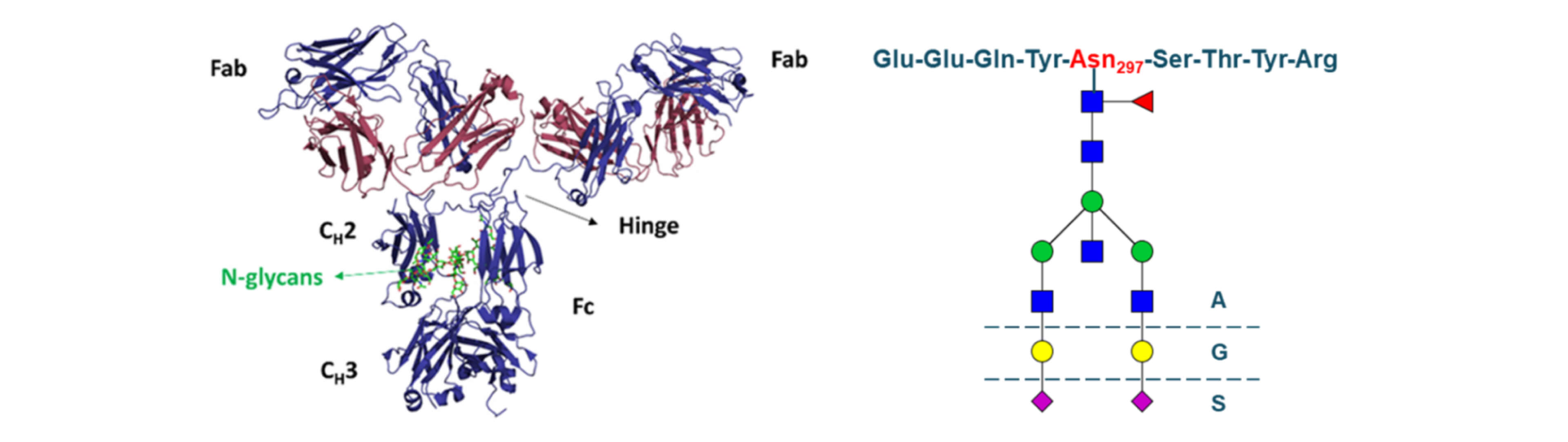
N-glycosylation modification of antibodies
1. Glycosylation Modification Sites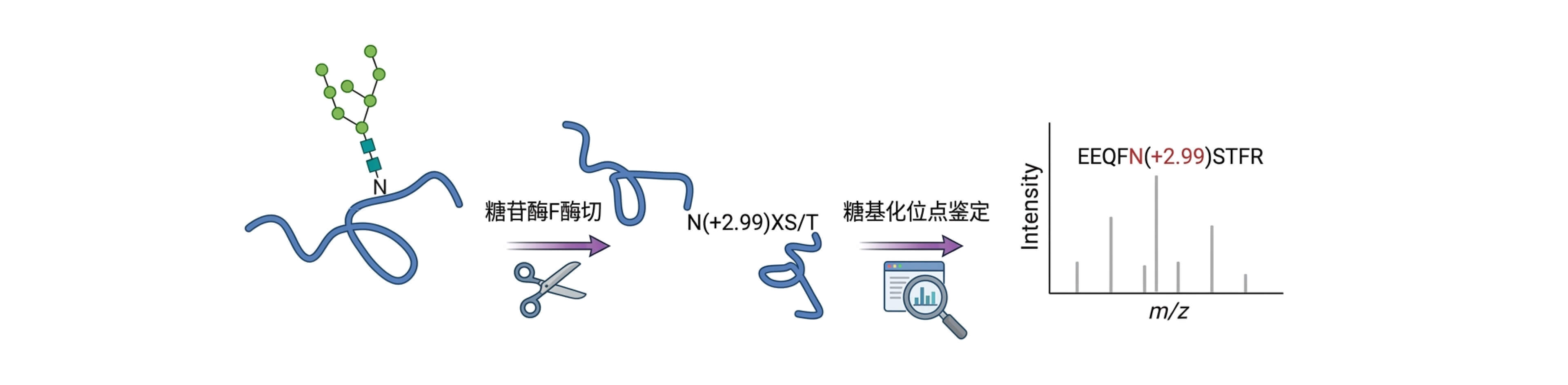
Glycosylation Modification Site Analysis Workflow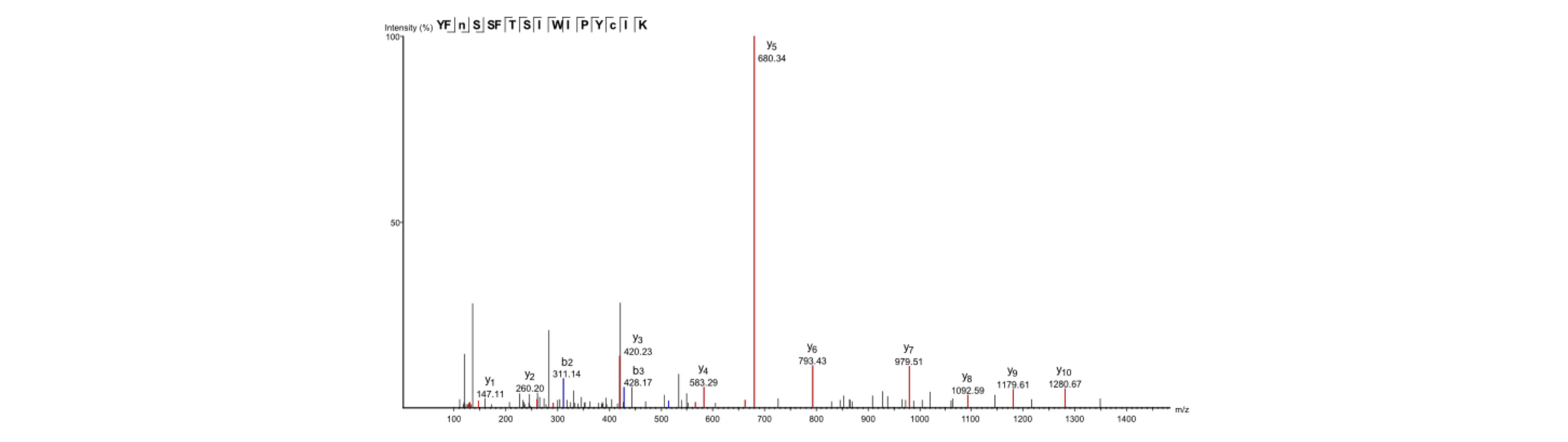
Protein N glycosylation modification site YFN (+2.99) SSFTSIWIPYC (+57.02) IK
2. Complete Glycopeptide Analysis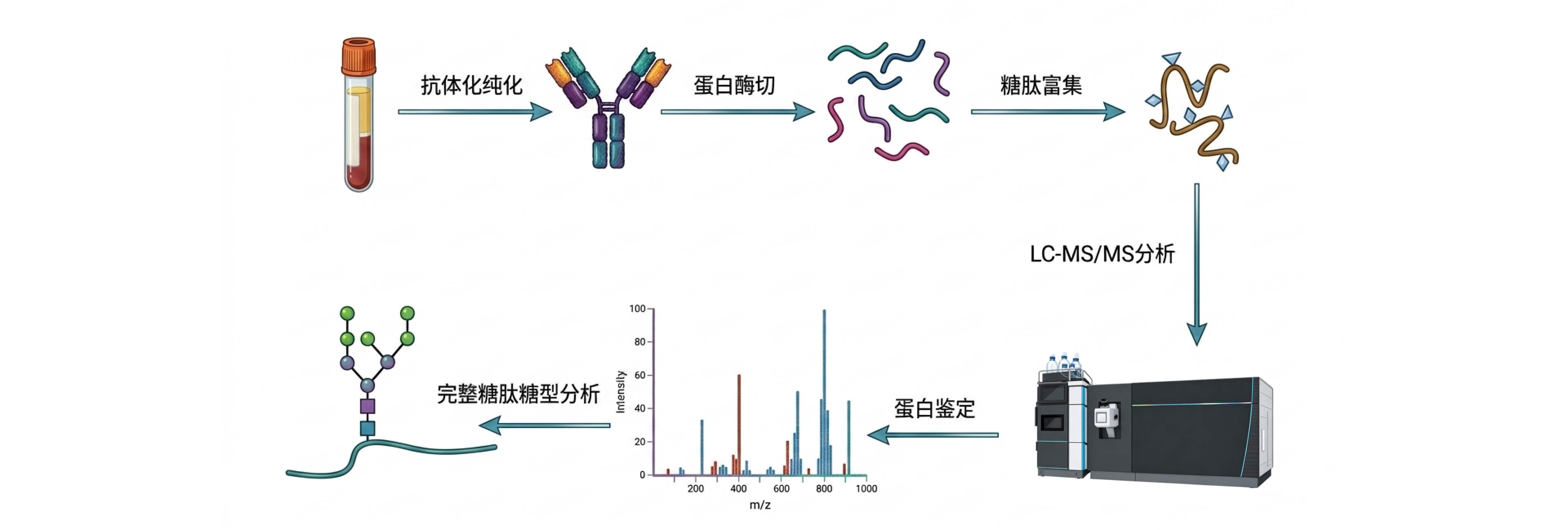
Complete Glycopeptide Sequence Analysis Workflow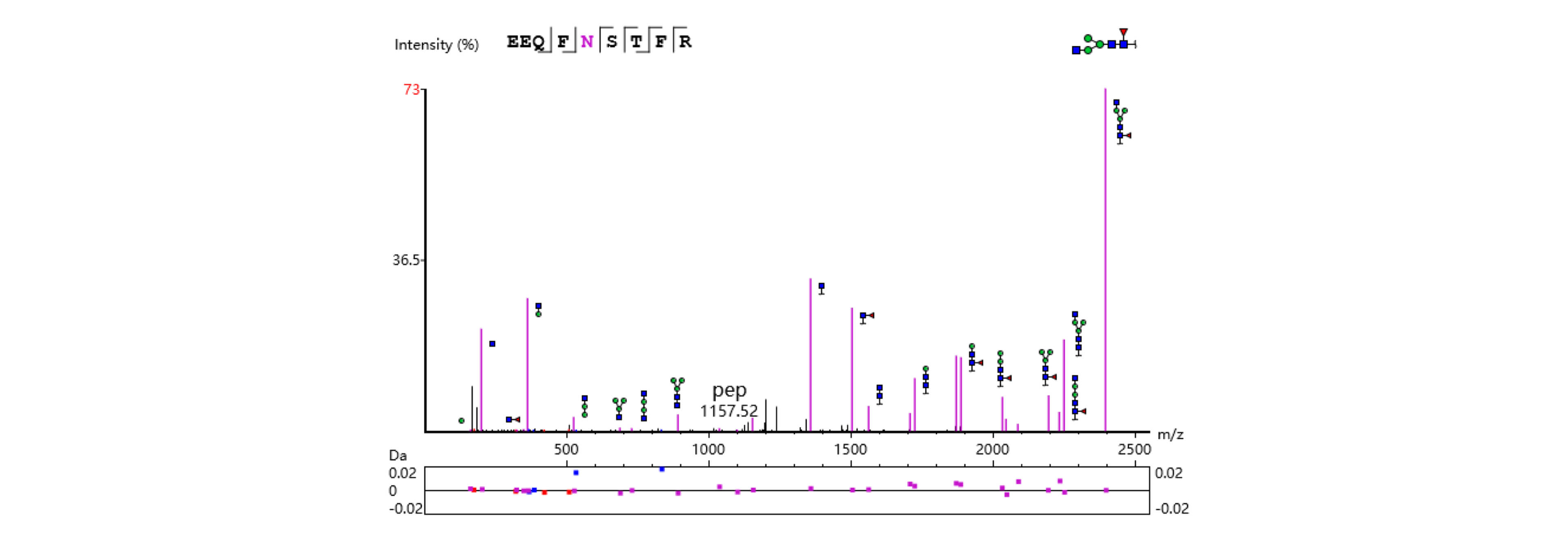
Glycopeptide MS/MS Secondary Mass Spectra
@2x.jpg)
Relative quantitative analysis of various glycosylation modifications (peak area)
3. Oligosaccharide Chain Analysis 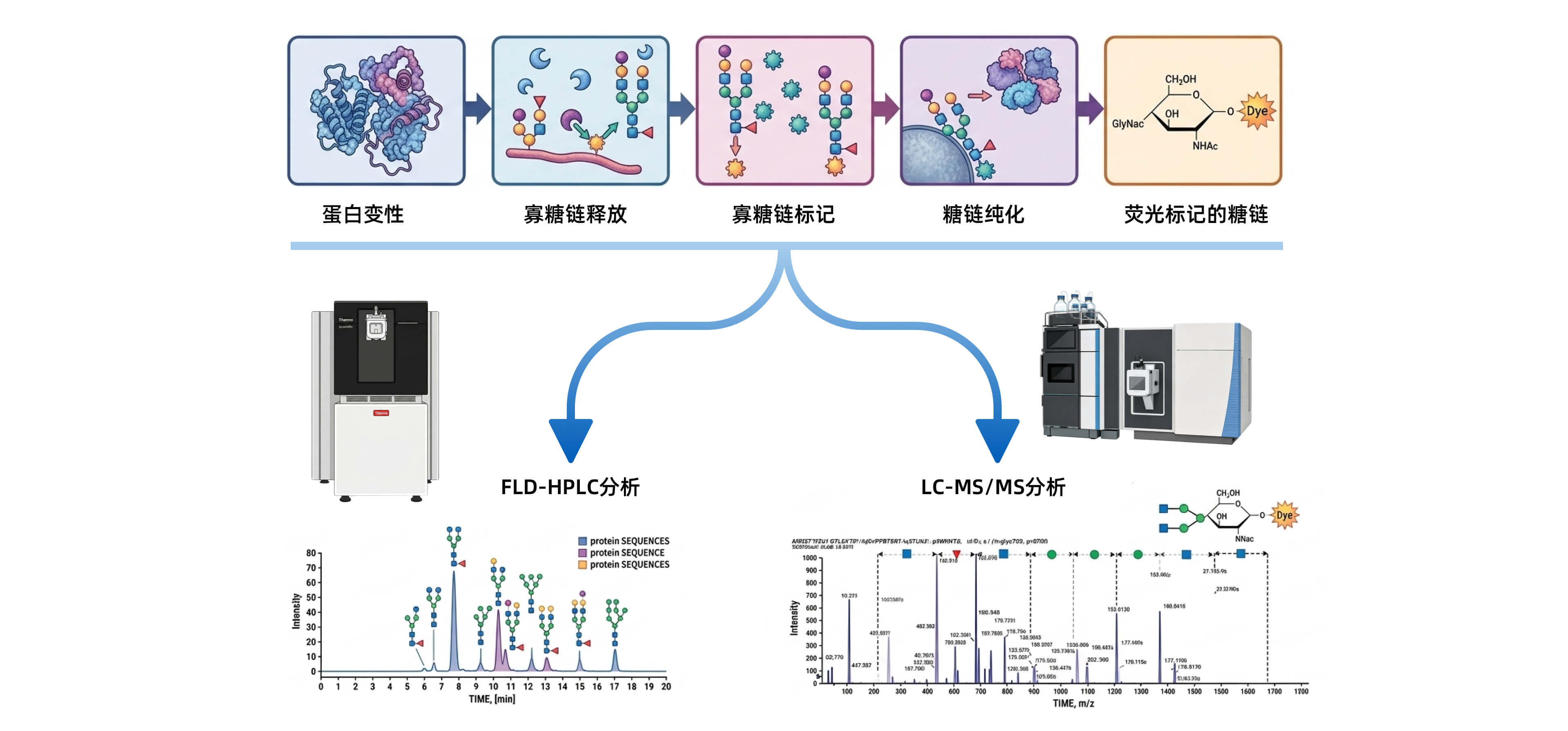
Oligosaccharide chain modification analysis procedure and results 
| Oligosaccharides | Average relative peak area (%) |
|---|---|
| G0F-N | 0.75 |
| G0 | 1.47 |
| G0F | 46.82 |
| Man5 | 1.21 |
| G1[6] | 0.75 |
| G1F[6] | 31.21 |
| G1F[3] | 9.27 |
| G2F | 7.04 |
| G2FS1[6] | 0.67 |
| G2FS1[3] | 0.37 |
| G2FS2 | 0.45 |
2-AB labeled Rituxan N-sugar HILIC-UHPLC fluorescence spectrum

Shenzhen Wininnovate Bio Co., Ltd.
Innovative mass spectrometry and AI technologies provide protein and metabolite mass spectrometry multi-omics solutions for life science research, empowering the growth of the biotechnology, pharmaceutical, and healthcare industries.


