

Product Overview
ADCs typically consist of a naked antibody, a linker, and a toxic small molecule (load). DAR refers to the ratio of drug/antibody after conjugation, generally ranging from 0 to 8. ADC drugs are classified into two categories based on the antibody conjugation site: lysine-conjugated and cysteine-conjugated ADCs. There are two commonly used methods for DAR value analysis:
(1) Hydrophobic Interaction Chromatography (HIC): This method is a traditional technique for protein separation, purification, and characterization. HIC allows proteins to be analyzed under mild, non-denaturing conditions that maintain their native structure and activity. HIC analysis of DAR values requires sufficient separation between antibody peaks with different loads, followed by weighted peak area calculation to obtain the DAR value, as shown in the figure.
(2) LC-MS: This method measures the peaks of antibodies conjugated with different numbers of small molecule compounds and calculates the weighted average DAR value based on the percentage of each peak area and the number of conjugated drugs. For lysine-conjugated ADCs, assays are often performed using traditional RPLC-MS platforms, where the protein is denatured before DAR measurement. However, these denaturing conditions can cause separation of the light and heavy chains of cysteine-conjugated ADCs. Therefore, the detection of cysteine-conjugated ADCs can be achieved using SEC-LC-MS non-denaturing mass spectrometry. DAR = sum of weighted peak areas / 100.
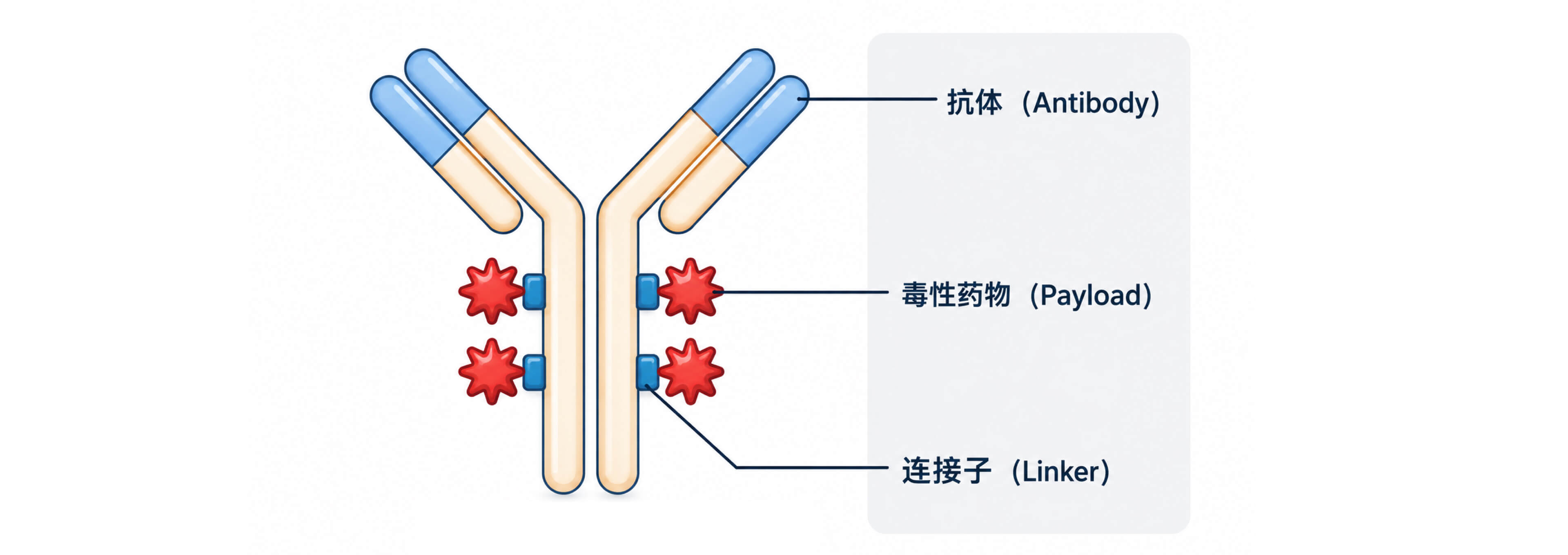 Antibody:"Navigation System"
specifically identifies and binds to tumor surface antigens (such as HER2 & CD20) to ensure precise drug delivery and reduce off-target toxicity.
Linker:"Bridge"
links antibodies and drugs. It needs to remain stable in the bloodstream to prevent premature drug leakage and ensure efficient drug release after entering tumor cells.
Small Molecule Drugs:"Warheads"
responsible for killing tumors. They are usually highly active cytotoxins (such as microtubule inhibitors), which induce tumor cell apoptosis by interfering with cell division
| Characterization | LC-MS (High-Resolution Mass Spectrometry) | HIC-HPLC (Hydrophobic Interaction Chromatography) | CE-SDS (Capillary Electrophoresis) |
|---|---|---|---|
| Principle | Precise mass measurement, average/distribution DAR, absolute molecular weight | Hydrophobicity differential separation of DAR, DAR distribution | Size and charge difference separation, purity, integrity, subunit DAR |
| Key Performance Indicators | High accuracy/high resolution (can distinguish minute differences) | Medium accuracy/medium resolution (possibly co-eluted) | Medium to low accuracy/high resolution (suitable for subunits) |
| Application Scenarios | High instrument cost / R&D / Structural verification / Advanced quality control | Medium instrument cost / Routine quality control / Release testing | Low instrument cost / Purity analysis / Integrity analysis |

HIC-HPLC Analysis of DAR Value
Key Deliverables

SEC-HPLC-MS Analysis of DAR Values

Shenzhen Wininnovate Bio Co., Ltd.
Innovative mass spectrometry and AI technologies provide protein and metabolite mass spectrometry multi-omics solutions for life science research, empowering the growth of the biotechnology, pharmaceutical, and healthcare industries.


